Docs
How to prioritise SEO issues
SEO audits produce data. Prioritisation turns that data into decisions. A long list of issues is not an action plan. Some fixes protect important pages. Some remove technical risk. Some improve page clarity. Some can wait. The useful work is deciding what matters first. Interweb approaches prioritisation through crawl evidence, affected URLs, business value, ranking friction, and implementation effort. That is what turns an audit into a workflow.
Problem
Most SEO audits are too flat. They list missing titles, thin content, broken links, weak headings, indexability concerns, sitemap issues, and internal linking gaps as if every issue carries the same weight. That creates audit fatigue. Teams do not know where to start. Developers get unclear tickets. Clients see a large list and assume nothing is moving. Important issues get buried under low impact fixes. The problem is not that the audit found too much. The problem is that the audit did not create order.
Why it matters
SEO resources are limited. Every team has constraints. Developer time is limited. Content time is limited. Client attention is limited. Founder attention is limited. Prioritisation protects that time. The right priority system helps teams fix high value issues before low value ones. It helps separate urgent technical problems from routine improvements. It helps connect SEO work to pages that matter commercially. Without prioritisation, teams can spend hours fixing low impact issues while the pages that drive leads, sales, or visibility remain weak.
Concept explanation
A useful SEO priority model should consider several signals. Impact looks at how much the issue could affect visibility, crawlability, indexation, relevance, or conversions. Risk looks at whether the issue could block discovery, cause page removal from search, create duplication, weaken trust, or damage key pages. Affected URLs show the scale of the problem. A template issue across many important pages can matter more than one isolated issue. Business value looks at whether the affected page supports revenue, leads, product discovery, local visibility, or strategic keywords. Implementation effort looks at how hard the fix is. Some fixes are quick. Others need developers, design changes, content rewrites, or stakeholder approval. Ranking friction looks at whether the issue connects to a page that is not ranking, losing visibility, or ranking for the wrong query. A strong priority decision does not rely on one signal. It combines evidence, business context, and practical effort.
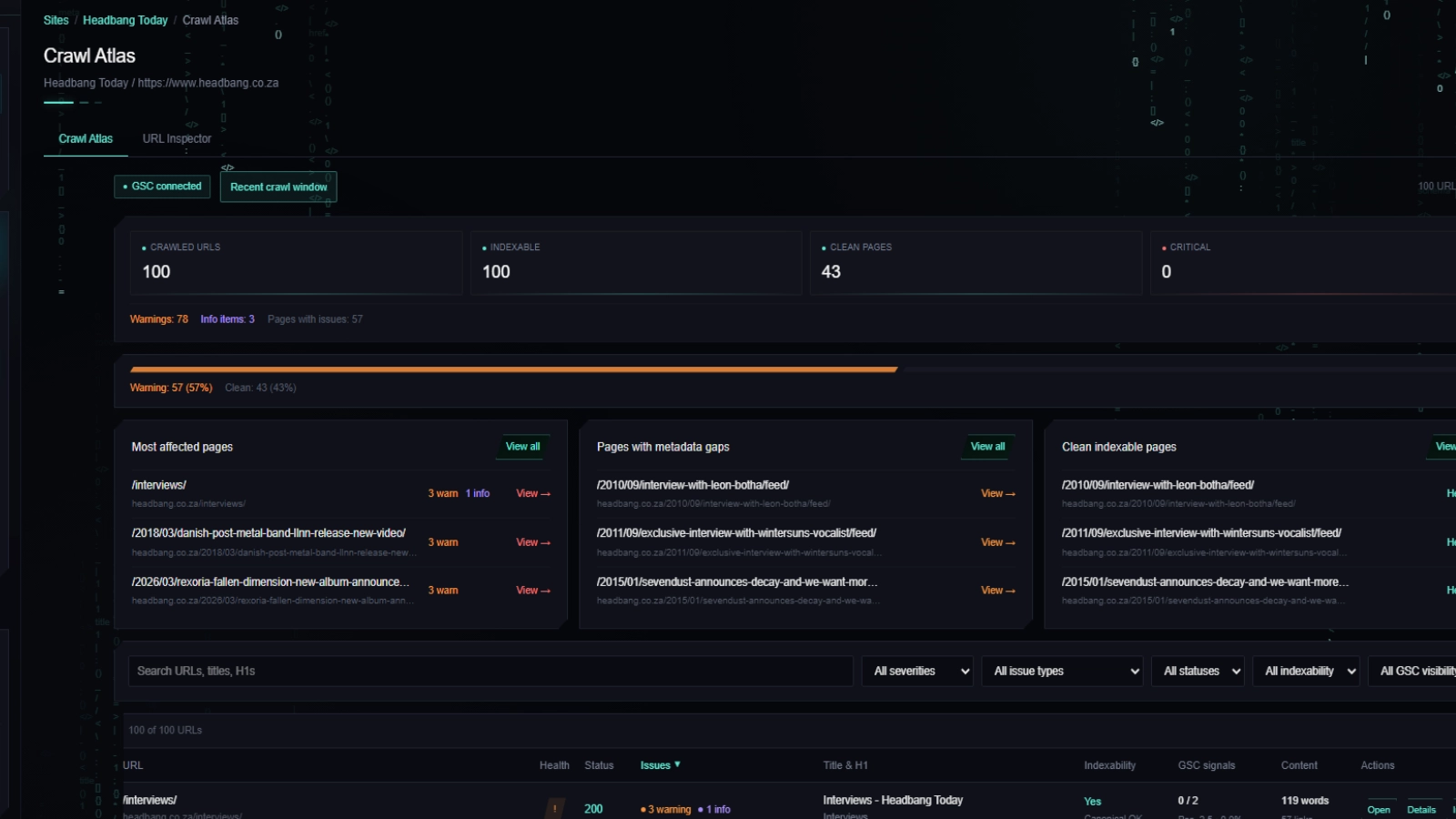
Crawl Atlas helps surface technical and content evidence across affected URLs.
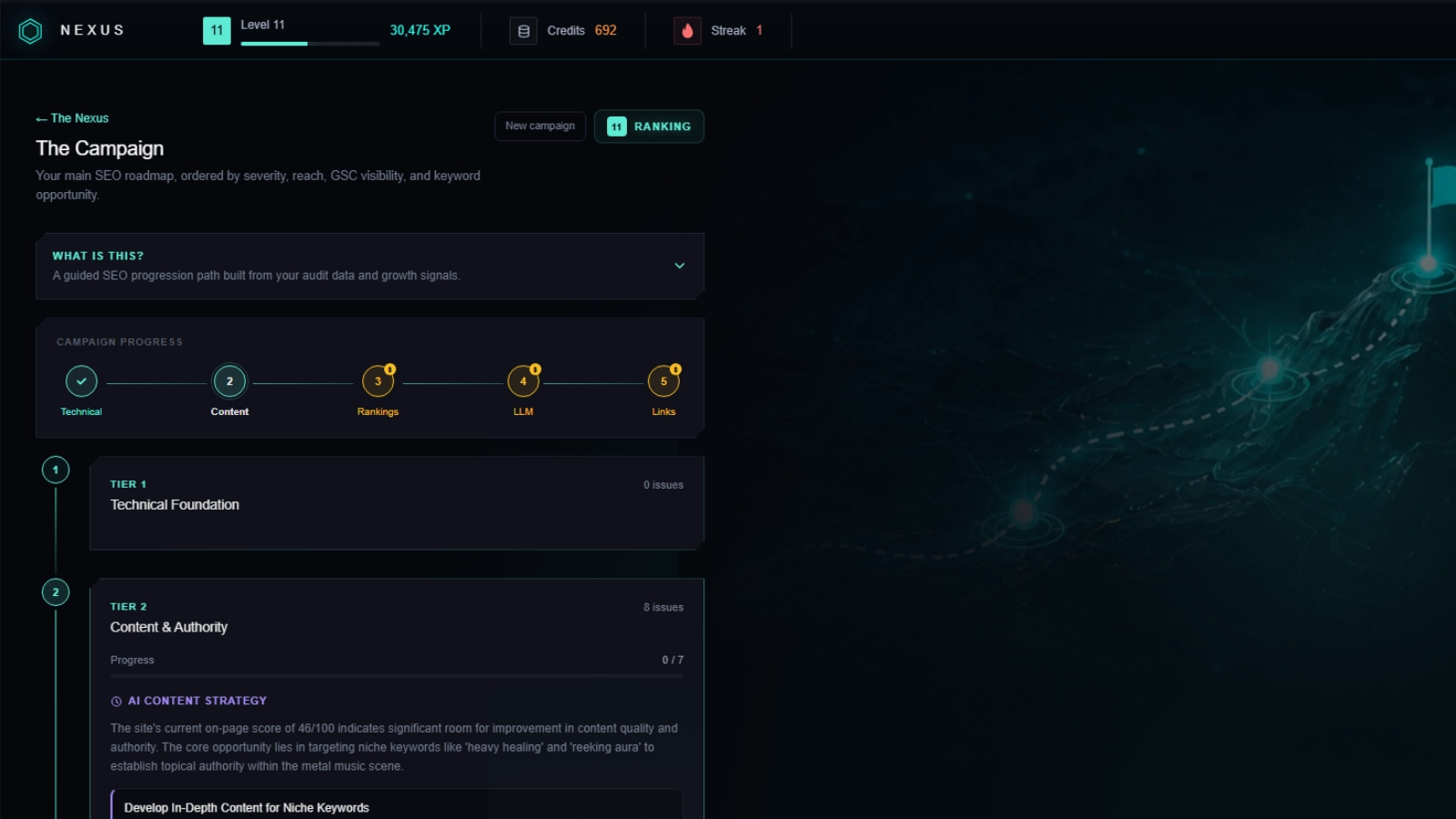
Growth Nexus helps shape priorities into missions so users can focus on the next useful action.
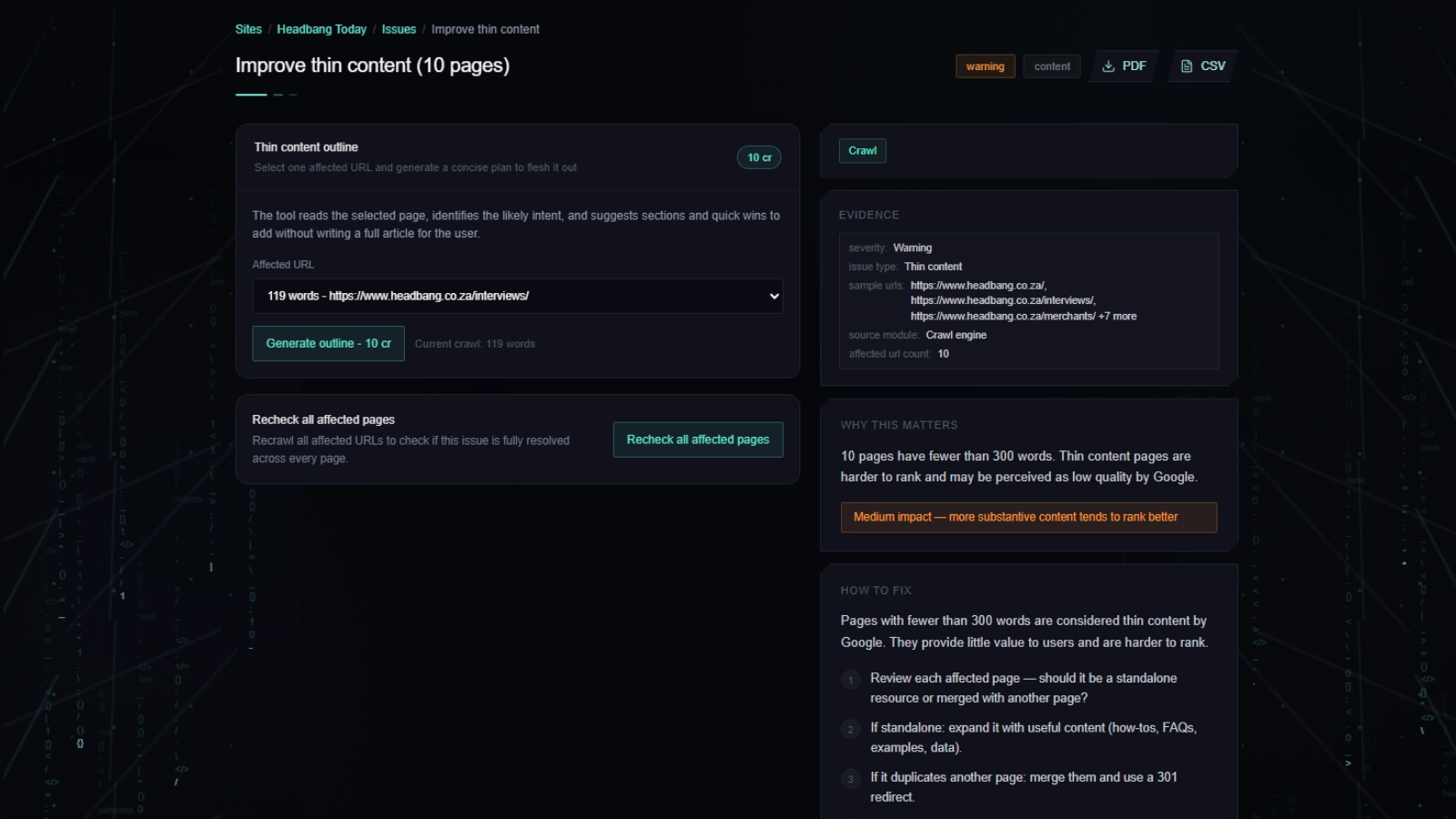
The SEO issue tracker helps turn findings into tracked work.
How Interweb approaches it
Interweb connects prioritisation to the product workflow. Crawl Atlas helps surface technical and content evidence across affected URLs. The SEO issue tracker helps turn findings into tracked work. Growth Nexus helps shape priorities into missions so users can focus on the next useful action. Rank Cortex adds another layer where ranking friction is involved. If a page is underperforming, or the wrong URL ranks for a keyword, the issue may need to move higher in priority. Interweb does not treat every audit finding as equal. It helps frame what should be fixed first and why.
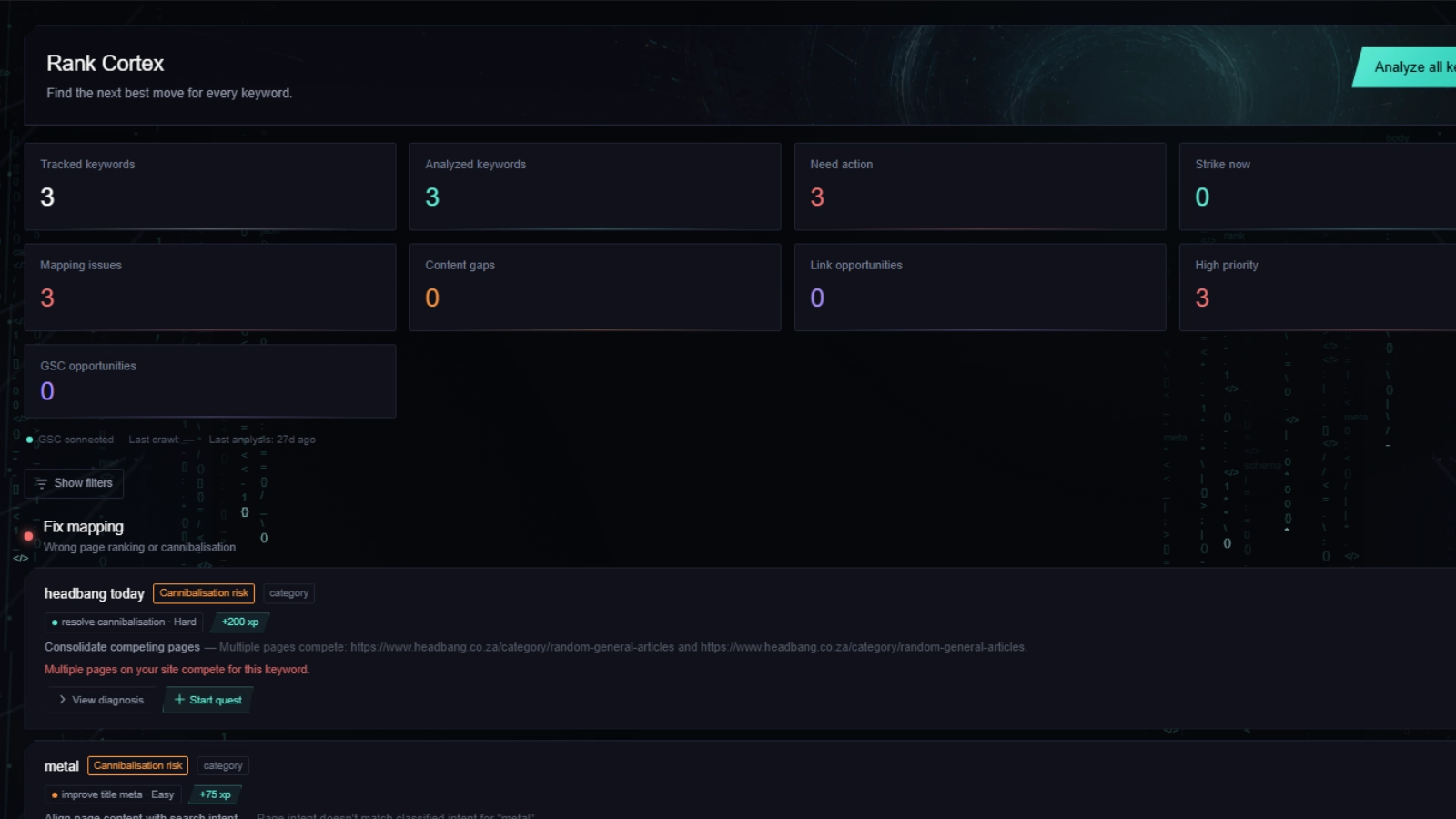
Rank Cortex adds analysis where ranking friction is involved.
Practical examples
Example one
A missing meta description on a low traffic archive page is usually not as urgent as a noindex signal on a core service page.
Example two
A weak internal linking pattern across five commercial pages may be more important than dozens of minor title length warnings.
Example three
A page ranking in position twelve for a high value query may deserve priority because a focused fix could move it closer to page one.
Example four
A technical issue affecting a reusable template may be high priority because one fix can improve many URLs.
Example five
A wrong page ranking for a commercial keyword may need Rank Cortex analysis before the team rewrites content blindly.
Frequently asked questions
What is SEO issue prioritisation?
SEO issue prioritisation is the process of deciding which audit findings should be fixed first based on impact, risk, affected URLs, business value, implementation effort, and ranking context.
Why do SEO audits need prioritisation?
Without prioritisation, teams can waste time on low impact fixes while important technical, content, or ranking issues remain unresolved.
What makes an SEO issue high priority?
An issue is usually high priority when it affects important pages, creates indexability risk, blocks visibility, weakens commercial pages, or connects to ranking friction.
Should quick fixes always come first?
Not always. Quick fixes can build momentum, but high risk or high value issues should not be ignored just because they take longer.
How does Interweb help prioritise SEO issues?
Interweb helps connect crawl evidence, affected URLs, issue tracking, Growth Nexus missions, and Rank Cortex analysis where ranking friction is involved.
Can prioritisation change over time?
Yes. Priorities can change after a crawl, ranking shift, implementation update, or new Search Console signal.