Docs
Why SEO audits do not turn into action
SEO audits rarely fail because they found nothing useful. They fail because the findings do not become implemented work. A static audit can identify real problems, but it often has no owner, no priority order, no status system, no recheck workflow, and no proof layer. Once the document is delivered, the work depends on memory, meetings, and scattered follow ups. Interweb is built around a different model. Find the issue. Assign meaning. Create the action. Track the fix. Record the change. Report the progress.
Problem
Traditional SEO audits are often treated as deliverables. That is the core problem. A deliverable can be useful, but it does not create motion by itself. A PDF can explain issues. A spreadsheet can list affected URLs. A meeting can align stakeholders. But none of those things guarantee implementation. Recommendations get lost for common reasons. No one owns the next action. The priority order is unclear. The issue status is not tracked. The same problem appears in multiple places. The fix is made but not recorded. The fix is recorded but not rechecked. The client sees activity but not proof. When this happens, the audit becomes a snapshot instead of a system.
Why it matters
SEO gains depend on implementation. A crawl can find the issue. A strategist can explain the issue. A developer or content team can fix the issue. But unless those steps connect, progress becomes hard to prove. This matters even more for agencies. Clients do not only need to know what was recommended. They need to know what was changed, why it was changed, when it was completed, and what happened after. For in house teams, the issue is similar. If SEO work is not tracked, it competes poorly against other priorities. An audit without implementation control is unfinished work.
Concept explanation
Turning SEO audits into action items requires a few control layers. Ownership defines who is responsible for the next step. Priority defines what should happen first. Status shows whether the issue is open, in progress, fixed, blocked, or needs rechecking. Affected URLs connect the recommendation to real pages. Rechecks help confirm whether a fix worked. Change history records what changed, when it changed, and why. Reporting connects the work to rankings, AI Mentions, implementation history, and client communication. This is the difference between an SEO audit and an SEO operating system.
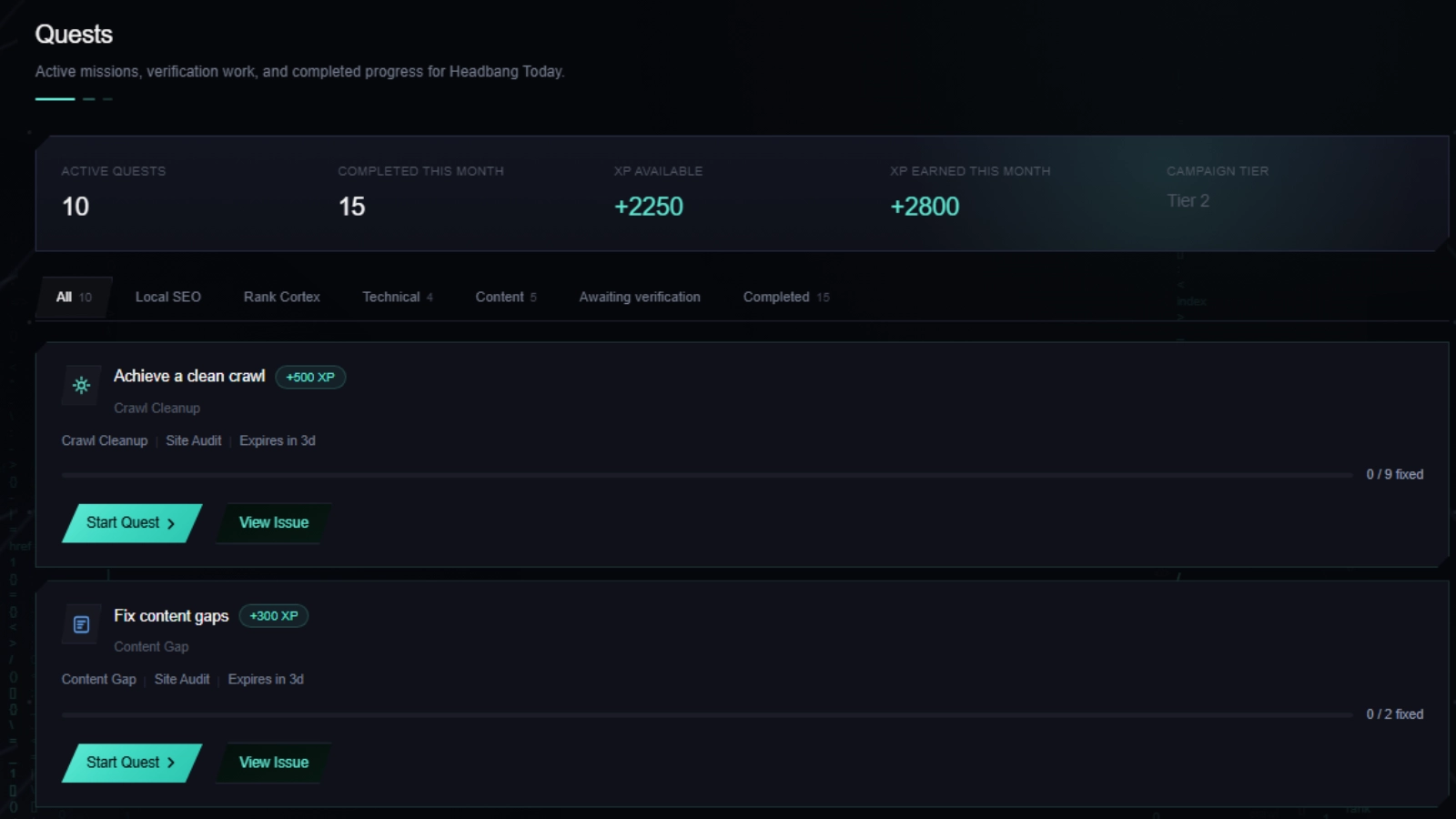
The Change Log records what changed, when it changed, and why.
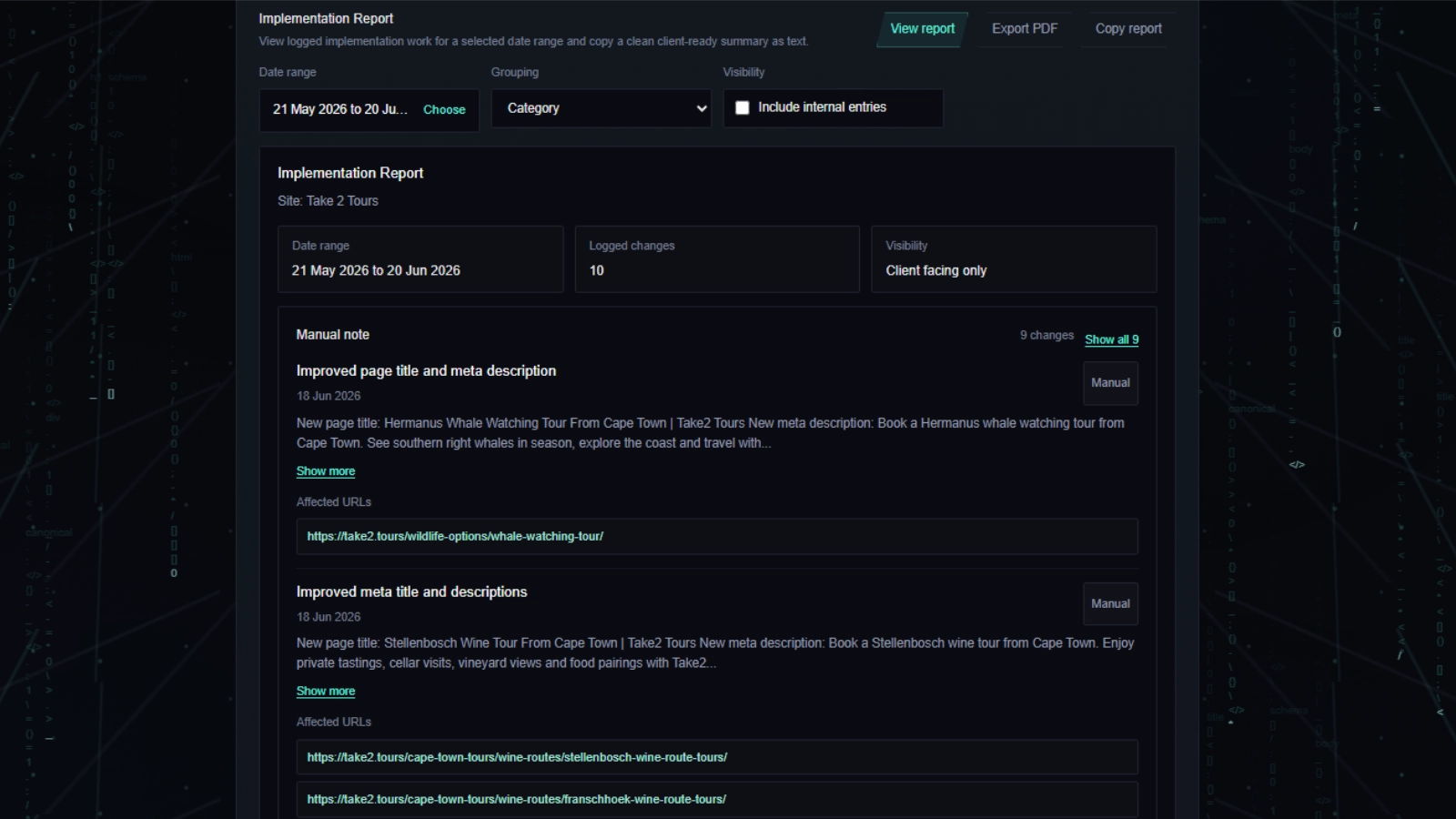
Implementation Reports help turn completed work into client ready reporting.
How Interweb approaches it
Interweb is an SEO audit and action platform. Crawl Atlas provides the evidence layer by mapping technical and content issues. Growth Nexus helps turn findings into missions. The SEO issue tracker helps manage status, affected URLs, priorities, and rechecks. The Change Log records what changed, when it changed, and why. Implementation Reports help turn completed work into client ready reporting by connecting changes, ranking context, AI Mentions, and implementation history. This gives SEO work a memory. Instead of asking what happened last month, the team can see the trail.
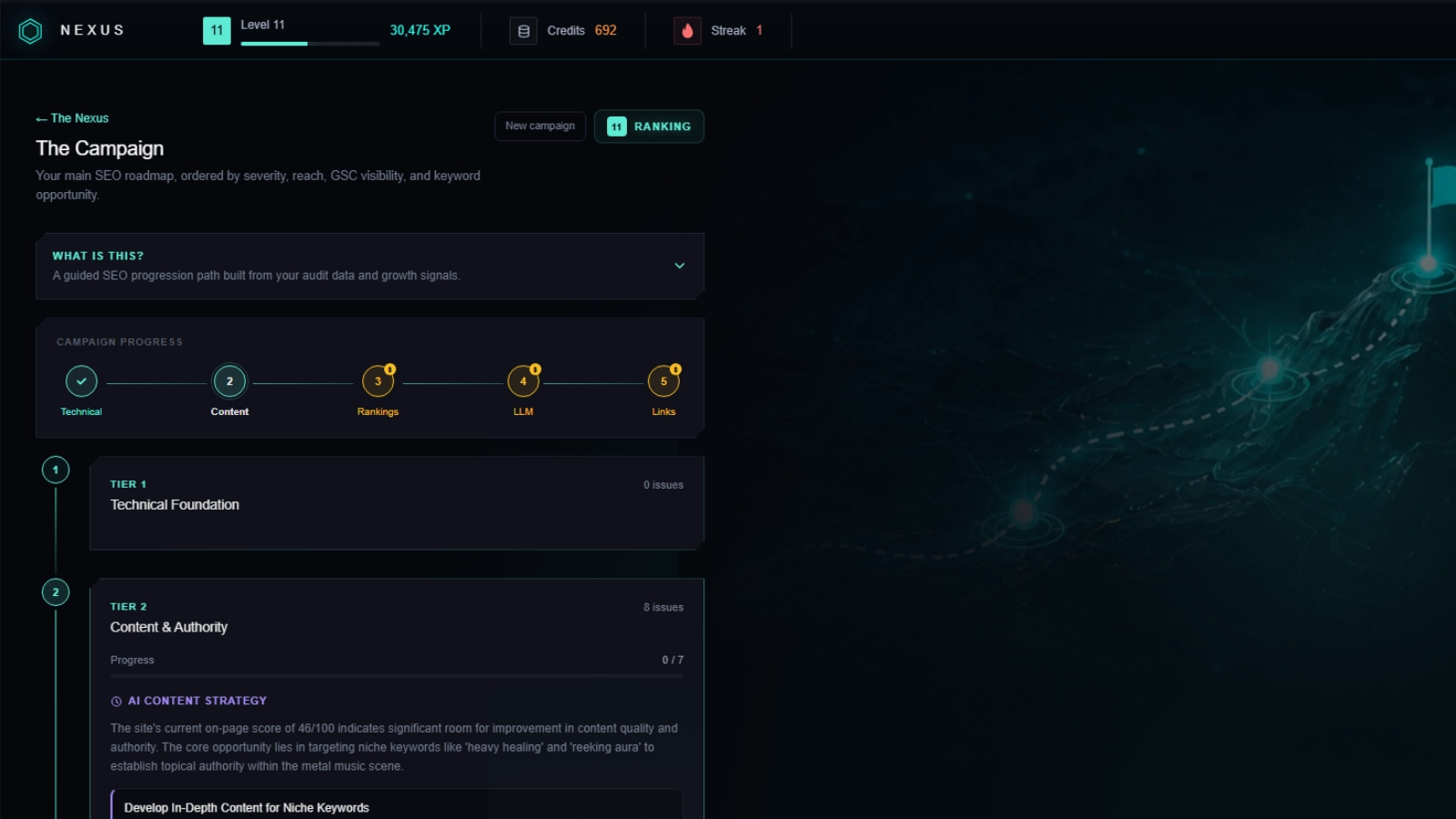
Growth Nexus helps turn findings into missions.
Practical examples
Example one
An audit recommends improving internal links to a service page. Without tracking, the task may be forgotten. Inside Interweb, it can become a mission with a status and implementation note.
Example two
A developer fixes an indexability issue, but no one records the change. The Change Log gives the team a place to capture what changed and why.
Example three
An agency completes a batch of metadata fixes. Implementation Reports help show the work completed, the affected pages, and the wider SEO context.
Example four
A recheck fails because the affected URL cannot be validated. The issue should remain open until it can be checked properly.
Example five
A ranking change happens after several page updates. Implementation history helps the team understand what changed before the movement.
Frequently asked questions
Why do SEO audits not get implemented?
SEO audits often fail because recommendations have no clear owner, priority, status, recheck process, implementation record, or reporting layer.
What is an SEO action item?
An SEO action item is a specific task created from an audit finding, ranking opportunity, crawl issue, or implementation need.
How can teams improve SEO implementation?
Teams can improve implementation by assigning ownership, prioritising work, tracking status, recording changes, validating fixes, and reporting progress.
What is the role of a Change Log in SEO?
A Change Log records what changed, when it changed, and why. It helps teams connect implementation work to future SEO performance.
What are Implementation Reports?
Implementation Reports are client ready reports that connect completed work, ranking context, AI Mentions, and implementation history.
Does Interweb guarantee that SEO fixes will improve rankings?
No. Interweb helps teams find, prioritise, track, and report SEO work. Rankings depend on many factors outside any one tool.