Docs
Why keywords rank the wrong page
Sometimes the problem is not that your site does not rank. The problem is that the wrong page ranks. A blog page may rank for a commercial keyword. An old service page may outrank the new one. A category page may compete with a landing page. Google may choose a weaker URL because the site sends mixed signals about which page owns the topic. This is ranking friction. Interweb’s Rank Cortex is built to help frame these problems through keyword ownership, intent alignment, and page level signals.
Problem
Wrong page ranking happens when search engines choose a URL that is not the page you wanted to rank. This can happen even when the intended page looks better to the business. The issue is usually signal confusion. Two pages may target similar queries. Internal links may point to the weaker page. The informational page may answer the query more clearly than the commercial page. The intended page may be too thin. The title and headings may not align with search intent. The site may not have a clear topical structure. The result is a ranking pattern that looks confusing. The keyword has visibility, but the wrong page receives it.
Why it matters
Wrong page ranking can waste organic opportunity. If an informational page ranks for a commercial query, users may land in the wrong part of the journey. If an old page ranks instead of a stronger updated page, the business loses control over the message. If multiple pages compete for the same keyword, neither page may perform as well as it could. This matters for conversions, internal linking, content planning, and ranking stability. Keyword ownership helps solve the problem by asking a clear question. Which page should own this query? Once that is clear, the site can be adjusted to support that page.
Concept explanation
Keyword ownership is the relationship between a target search query and the page that should rank for it. A page has stronger ownership when its title, headings, content, internal links, schema, intent match, and surrounding site signals all support the same topic. Ranking friction appears when those signals are weak or split. Common causes include mixed search intent, overlapping content, weak internal links, outdated pages, thin commercial pages, stronger supporting docs, unclear headings, and poor topical coverage. Diagnosing the issue means comparing the query, the ranking URL, the intended URL, and the signals around both pages. The question is not only why this page is ranking. The better question is why Google is choosing this page instead of the intended one.
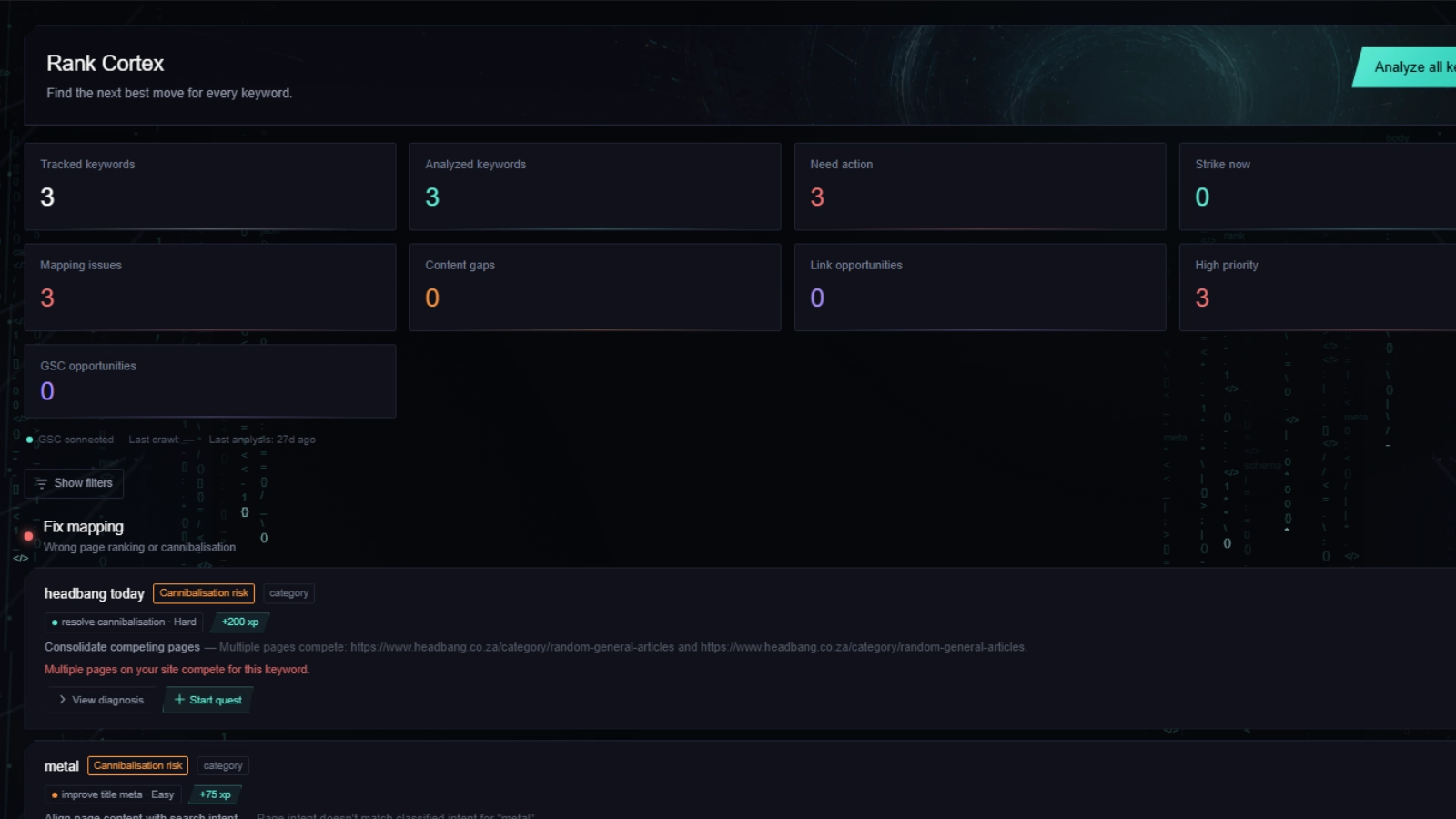
Rank Cortex helps frame keyword ownership and ranking friction.
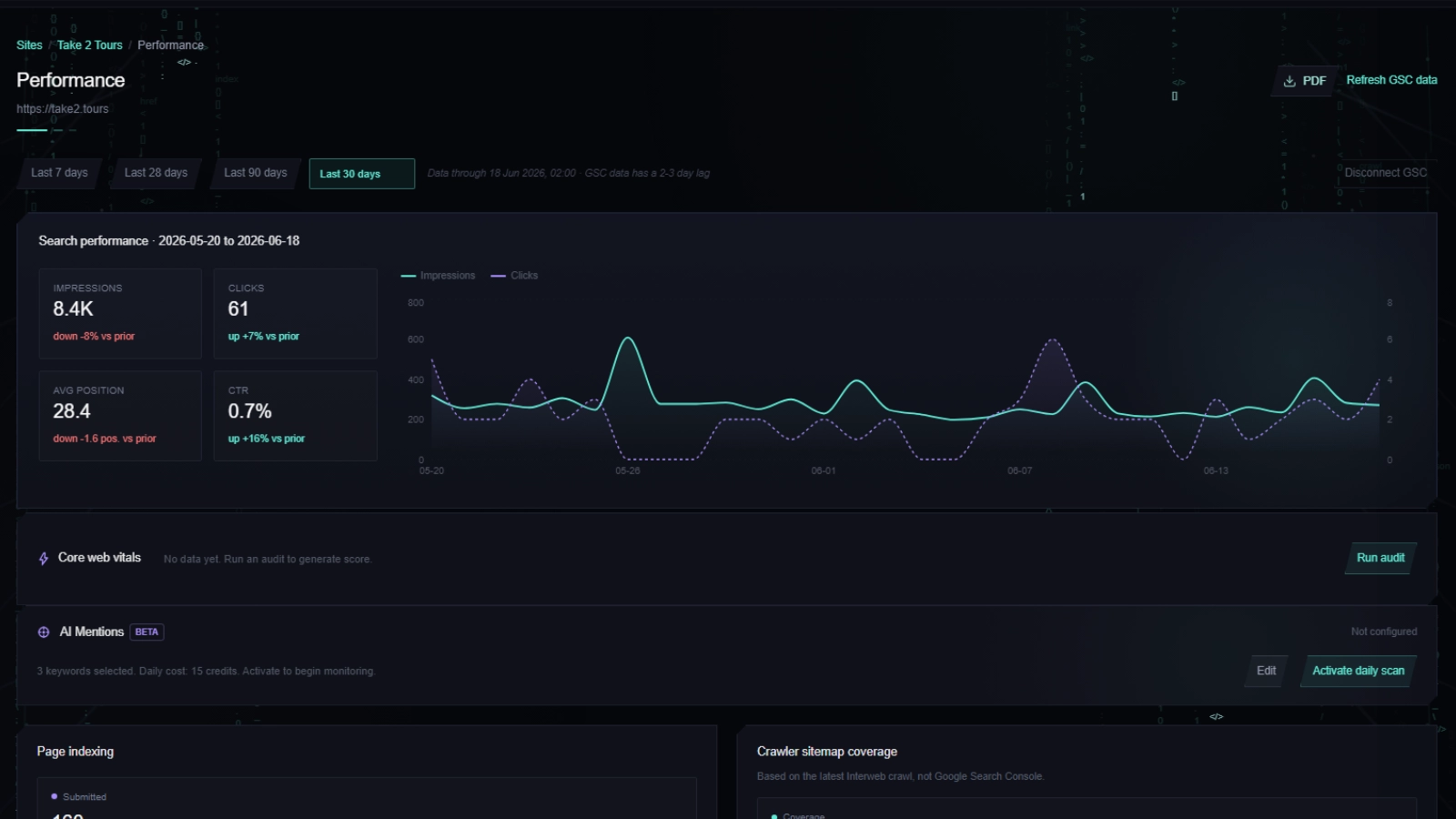
The Google Search Console SEO dashboard supports diagnosis by connecting queries, pages, impressions, clicks, and ranking patterns.
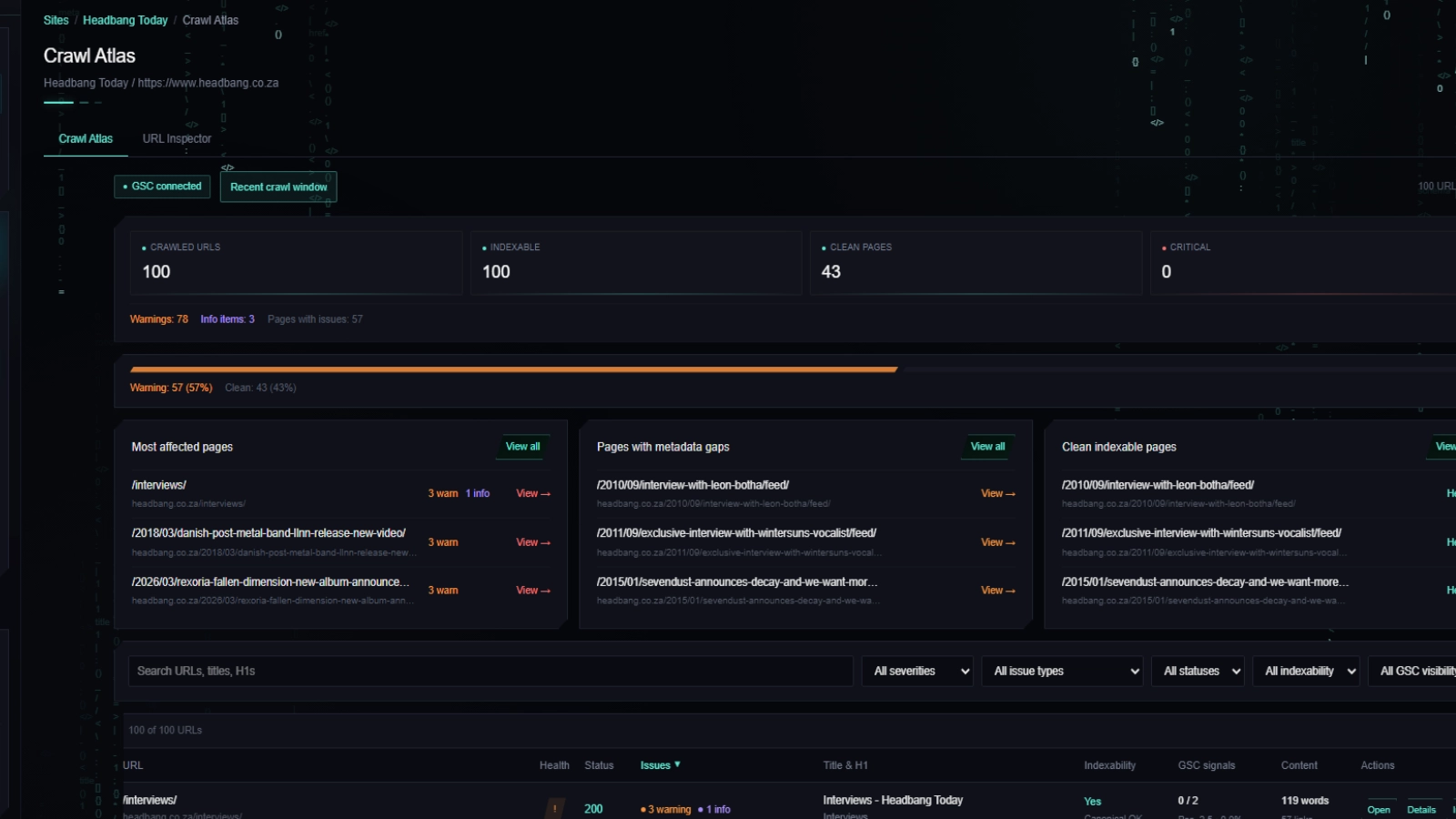
Crawl Atlas can support the diagnosis by showing page level technical and content signals.
How Interweb approaches it
Interweb approaches wrong page ranking through Rank Cortex. Rank Cortex helps frame keyword ownership and ranking friction. It can help users see when the wrong URL appears for a query and why the intended page may not be sending strong enough signals. The Google Search Console SEO dashboard supports this by connecting queries, pages, impressions, clicks, and ranking patterns. Crawl Atlas can support the diagnosis by showing page level technical and content signals. Growth Nexus helps turn the finding into a priority action. This gives the issue a workflow. Find the query. Identify the ranking URL. Identify the intended URL. Compare the signals. Create the action. Track the change.
Practical examples
Example one
A documentation page ranks for “technical SEO audit tool” instead of the commercial tool page. The doc may answer the topic clearly, while the product page does not yet own the intent strongly enough.
Example two
A blog style guide ranks for a service keyword because it has stronger internal links and more complete content than the service page.
Example three
Two landing pages target similar keywords. Google switches between them because the site has not made the primary page clear.
Example four
A local service page ranks for the wrong area because internal links and headings do not clearly support the correct location.
Example five
A page gets impressions but weak clicks. The issue may involve title alignment, intent mismatch, or the wrong page receiving the query.
Frequently asked questions
Why does Google rank the wrong page for a keyword?
Google may rank the wrong page when the intended page has weak signals, another page answers the intent better, internal links support the wrong URL, or multiple pages compete for the same topic.
What is keyword ownership in SEO?
Keyword ownership is the relationship between a target query and the page that should rank for it. Strong ownership means the page clearly matches the intent and is supported by site signals.
What is ranking friction?
Ranking friction is the signal conflict that prevents the right page from ranking clearly. It can involve mixed intent, overlapping content, weak internal links, or unclear page structure.
How can Search Console help diagnose wrong page ranking?
Search Console can show which queries trigger which pages. This helps reveal whether the intended page or a different URL is receiving visibility.
How does Rank Cortex help?
Rank Cortex helps frame keyword ownership, ranking friction, and wrong page ranking so users can diagnose the issue and create a focused SEO action.
Should I delete the wrong ranking page?
Not automatically. The better approach is to understand why it ranks, decide which page should own the query, and then adjust content, internal links, structure, or consolidation where needed.