Tool
SEO Audit Tool
Run a full technical SEO audit built on true Search Engine Optimization and Answer Engine Optimization signals. Crawl your site, find the next move, fix what matters, and keep score.
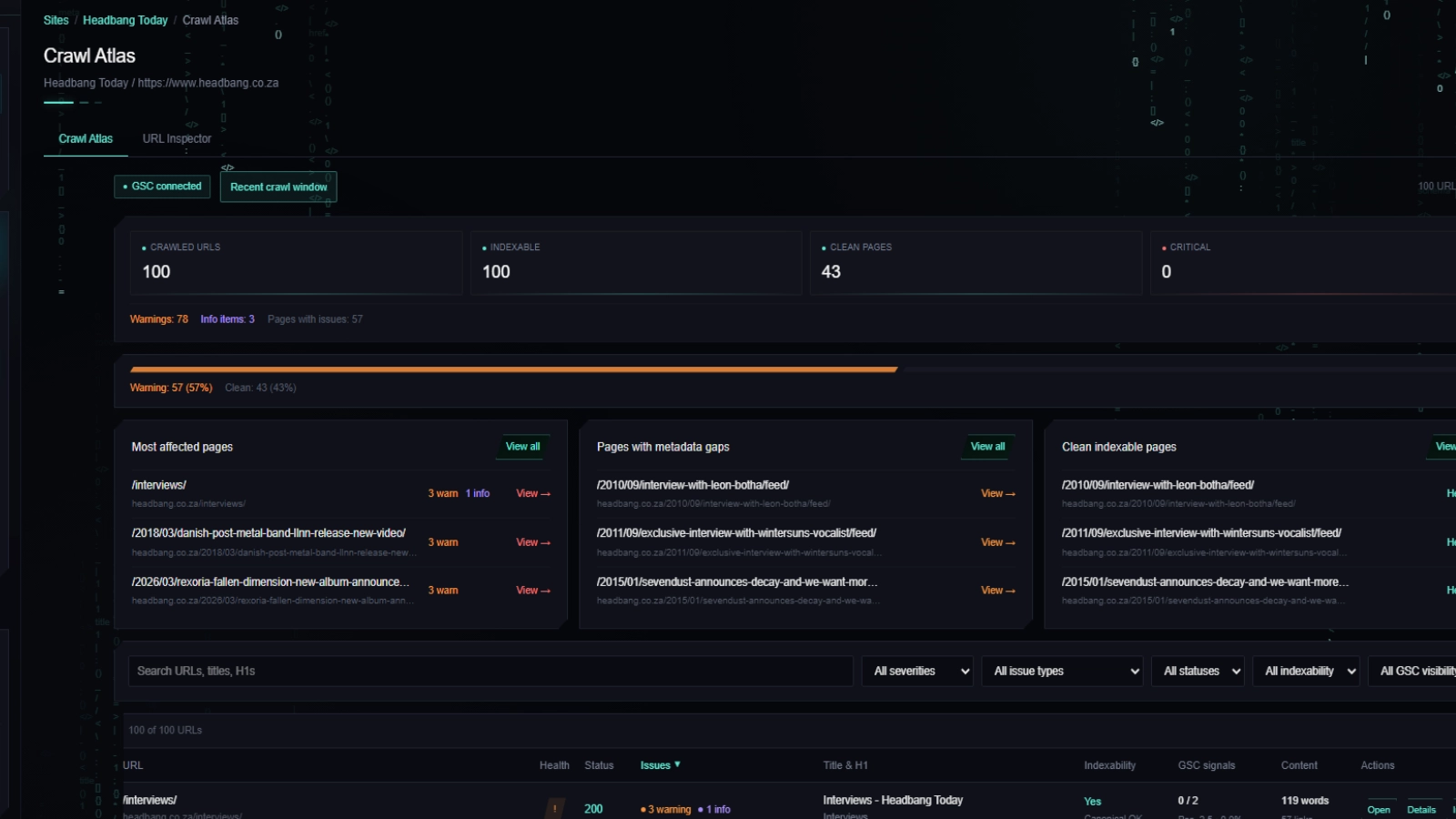
Every issue surfaced and prioritised by impact, ready to assign and fix.
The problem with traditional SEO audits
Most SEO audits are static PDFs. By the time you read them, the data is already stale. There is no way to track what was fixed, what is still broken, or whether the fix actually moved the needle. The audit becomes a document, not a process.
Why that matters
Every day an issue goes unfixed is another day it hurts your rankings. Without a system to prioritise, assign, and verify fixes, even the most thorough audit produces nothing but a long list of problems and a vague sense of overwhelm.
How Interweb approaches audits
Instead of a static report, Interweb runs a live, actionable audit. Every crawl surfaces issues grouped by severity and impact. Prioritise what matters, assign fixes, verify once resolved, and recrawl to confirm. The audit becomes a feedback loop, not a PDF.
What the audit covers
Technical SEO
Crawlability, indexation, redirects, canonicals, metadata, broken links, and architecture.
On-page SEO
Titles, headings, internal links, content depth, duplicate signals, and search intent fit.
Core Web Vitals
Performance bottlenecks, speed signals, page experience risks, and priority fixes.
AEO readiness
Structured data, entity clarity, answer eligibility, content gaps, and machine-readable signals.
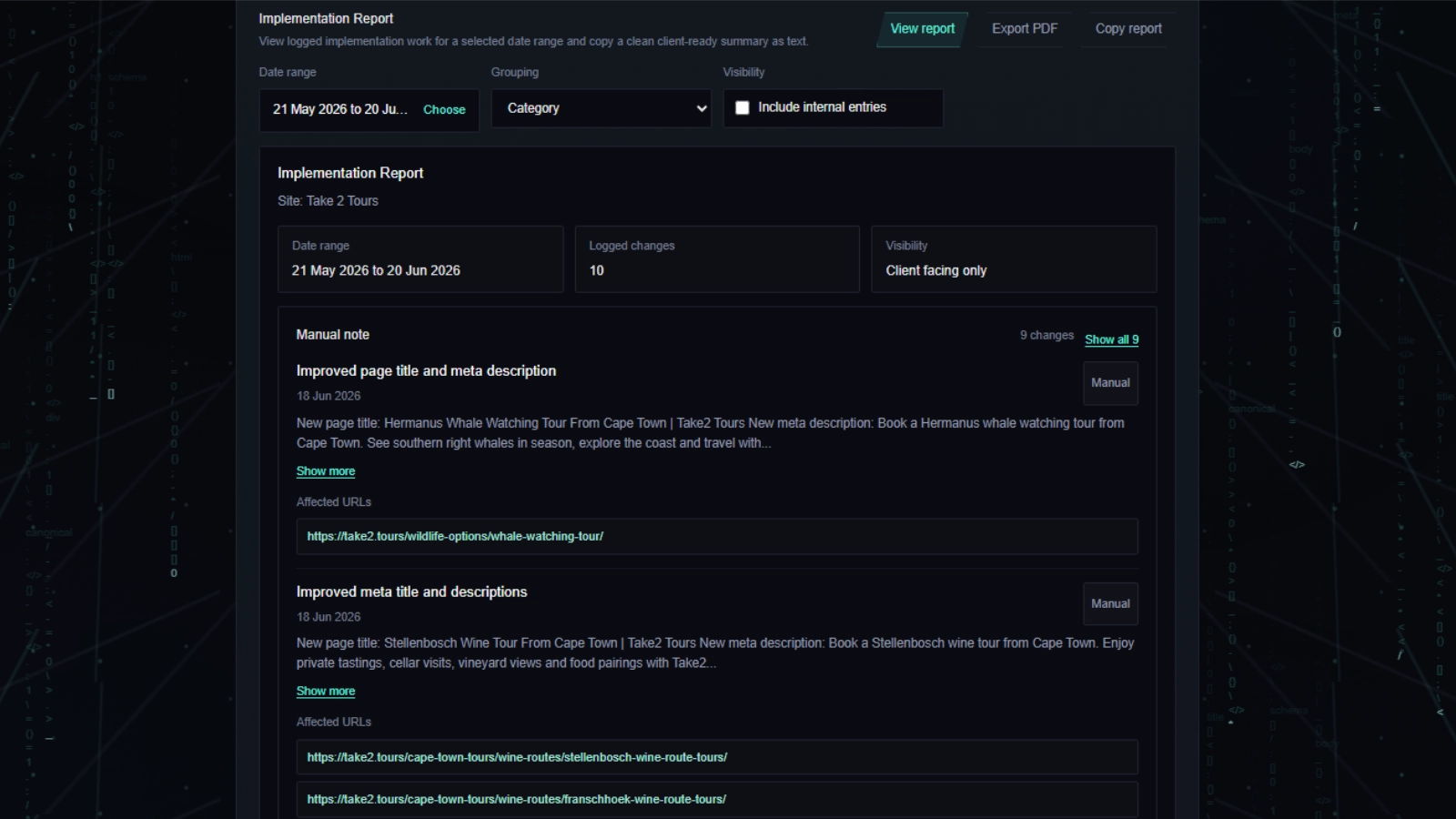
Track which fixes are done and verify the score improvement.
What it looks like in practice
Run a crawl on your site and see every issue surfaced and grouped by severity. Each issue shows an impact score, effort estimate, and affected URLs. Assign issues to your team, track status, and when you mark a fix as done, recrawl to verify the score actually improved.
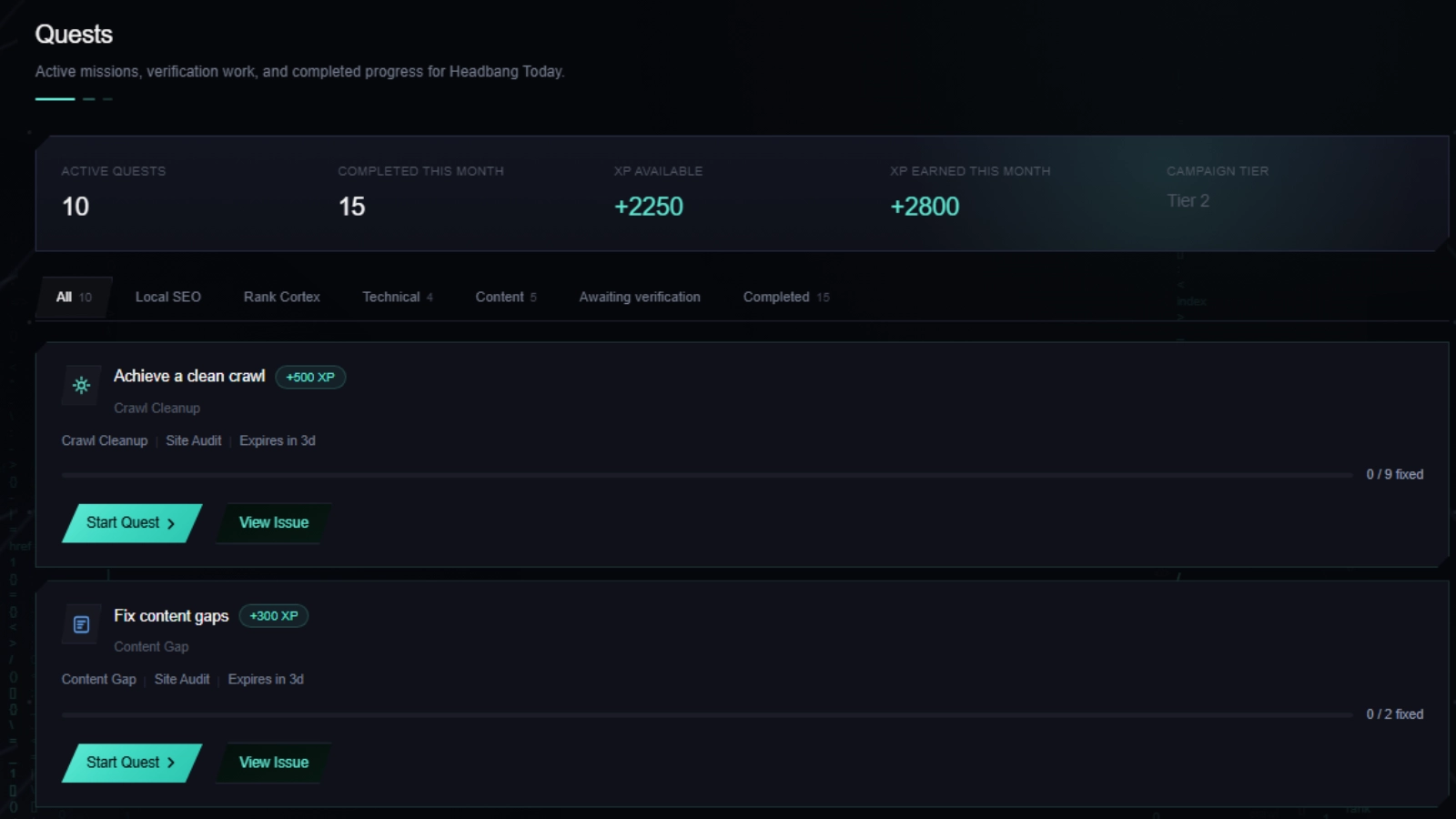
Your audit history — every crawl, every fix, every score change.
Frequently asked questions
What does the SEO audit check?
The audit checks technical SEO, on-page SEO, local SEO, Core Web Vitals, schema opportunities, entity clarity, answer eligibility, content quality, rankings, competitors, and GSC data.
How many pages can I crawl?
Start with a standard 100-page crawl or run a 500-page deep crawl when you need sharper coverage across templates, issues, and URL patterns.
Is this an AI SEO audit?
Yes. The audit uses AI to score technical SEO, on-page SEO, Core Web Vitals, and Answer Engine Optimization readiness, then suggests fixes for titles, descriptions, schema, links, and thin content.