Site systems
Understand platforms, templates, rendering paths and the structures that produce pages.
Interweb Media · Enterprise SEO Audit
An Enterprise SEO Audit investigates the systems, templates, markets and implementation dependencies that shape organic visibility across a complex website.
For large websites and organisations where scale changes the investigation, the evidence and the order of implementation.
Scale changes the diagnosis
At enterprise scale, one template decision can affect thousands of pages. A market structure can change discovery. A release dependency can determine whether a technically correct recommendation is actually possible.
The audit follows those relationships rather than producing a flat list of issues. It separates systemic patterns from isolated findings and turns evidence into a sequence teams can act on.
Investigation scope
Enterprise engagements may involve architecture, crawlability, indexation, templates, internal linking, faceted navigation, canonicalisation, JavaScript rendering, international SEO, structured data and search performance. The work follows what the site makes material.
Understand platforms, templates, rendering paths and the structures that produce pages.
Trace how important areas are found, crawled, rendered and represented.
Separate intended signals from duplication, exclusion and ownership ambiguity.
See how navigation, faceted paths and internal links distribute attention.
Identify patterns that differ by locale, product family, template or business unit.
Connect technical conditions to affected queries, pages and performance signals.
Evidence at the right level
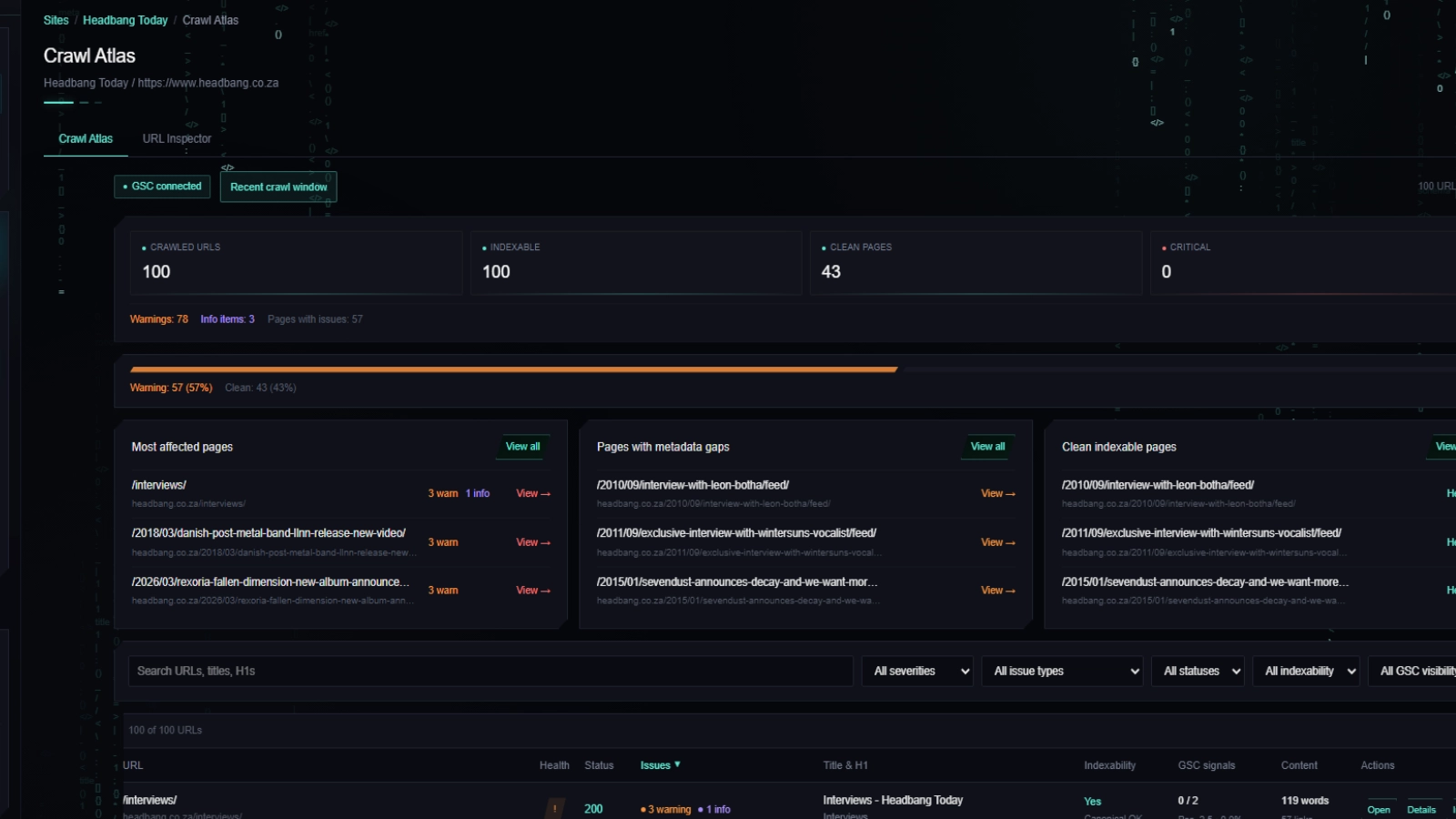
A page-level finding is only the beginning on a complex website. Interweb connects affected URL groups, templates, crawl evidence and search performance so the investigation can identify the condition that travels.
That makes the resulting recommendation more useful to technical, content, product and market teams.
Pattern-based diagnosis
Enterprise SEO work is rarely limited by the number of recommendations. It is limited by dependencies, competing roadmaps and the cost of changing a system that serves many markets or teams.
Prioritise systemic conditions with evidence across meaningful page groups.
Connect the technical condition to discoverability, indexation and performance.
Shape the recommendation so it can move through the correct team and release path.
Create implementation batches that reduce uncertainty and preserve verification.
Forensic deliverable
The output is not a catalogue of enterprise SEO terminology. It is a defensible account of what the evidence shows, where the pattern exists, why it matters and what should happen next.
Cross-team implementation
Enterprise recommendations often move through engineering, product, content, analytics, market and agency teams. The implementation path needs enough context for each team to understand the change, its reach and the verification required.
System behaviour, rendering, releases and technical dependencies.
Architecture, templates and decisions that shape the search journey.
International structures, ownership and local implementation context.
Evidence that shows whether the intended change has taken effect.
Choosing the right investigation
The Technical SEO Audit is the broader professional technical investigation. Enterprise SEO Audit is the right scope when templates, markets, systems, dependencies or scale materially change the diagnosis and implementation order.
When the complexity comes from protecting search signals during a large website move, the SEO Migration Audit provides the migration-specific investigation.
Platform support
Crawl evidence, affected groups, prioritisation, implementation history and verification stay connected so the service can move from diagnosis into coordinated action.
Start with the investigation
Begin with the website. The first step is to establish whether enterprise scope is justified by the evidence and what the investigation should cover.