Affected queries
Identify the searches that moved and the intent or commercial journey they represent.
Interweb Media · Google Ranking Drop
When important Google rankings fall, the first job is to confirm what moved, which pages and queries were affected and what the evidence supports before remediation begins.
No automatic penalty diagnosis. No recovery promise. A structured investigation of known position loss.
Confirm the movement
Confirm which queries moved, which pages were ranking, how the position was measured and whether the change is consistent across devices, locations, search surfaces and time periods.
A single observed position is not the same as a confirmed loss. The investigation establishes the shape of the movement before explaining it.
Affected queries and pages
Known position loss can be concentrated in a query group, page type, directory, market, device or intent. The scope follows the evidence rather than treating every URL and keyword as equally affected.
Identify the searches that moved and the intent or commercial journey they represent.
Confirm which URLs lost ownership, visibility or a position they previously held.
Compare templates, directories, topics, markets and stable areas for shared movement.
Consider devices, locations, result features, intent and changes in the search page.
Check whether Google began selecting another URL or whether the intended page changed.
Connect the position movement to search performance, releases, competitors and implementation history.
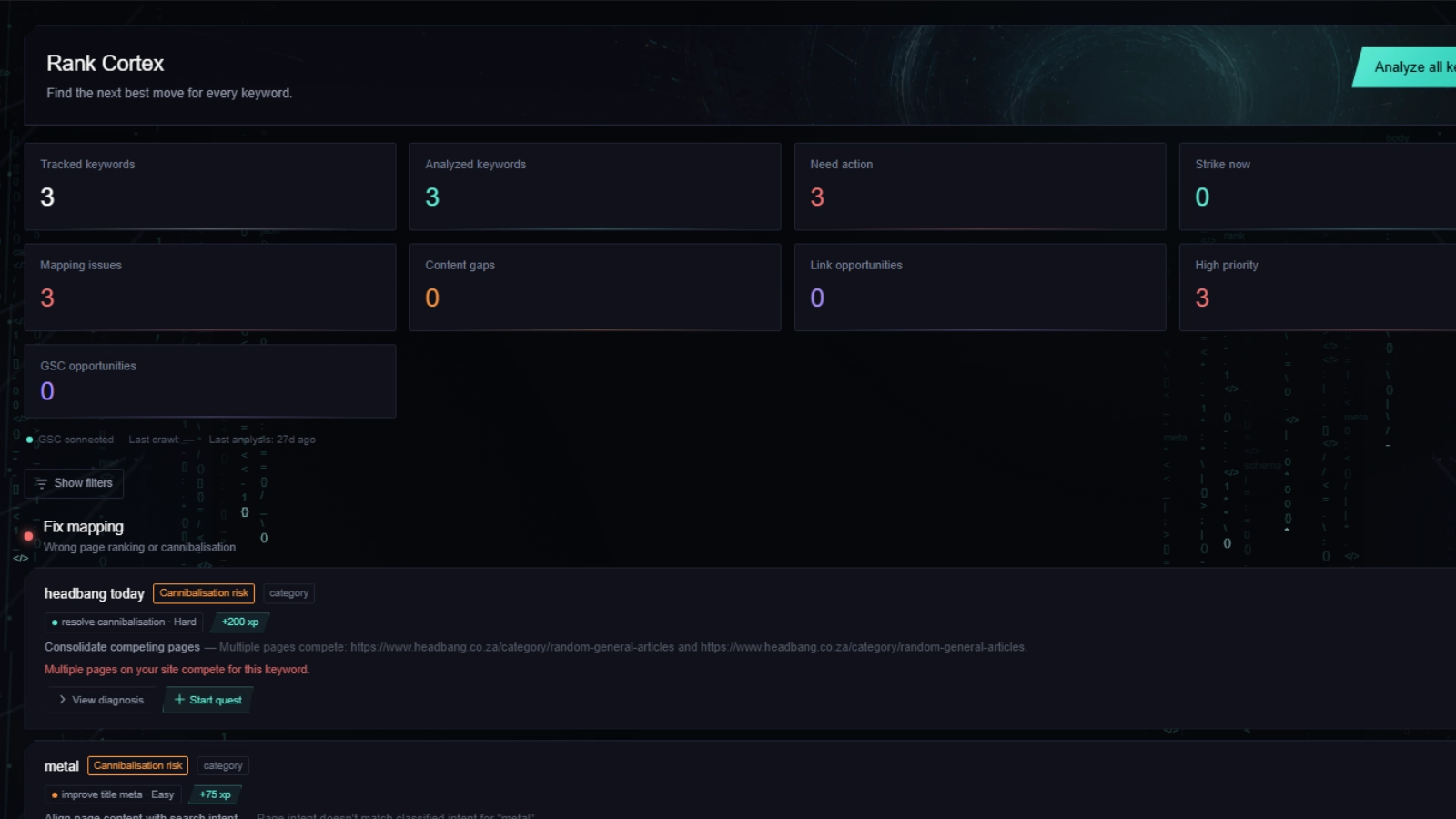
Stable versus affected
Comparing stable and affected pages helps narrow the investigation. If one template moved while another did not, or one topic lost rankings while another held, the contrast can be more useful than the aggregate decline.
The comparison does not prove a cause by itself. It makes the next question more specific.
Ranking timeline
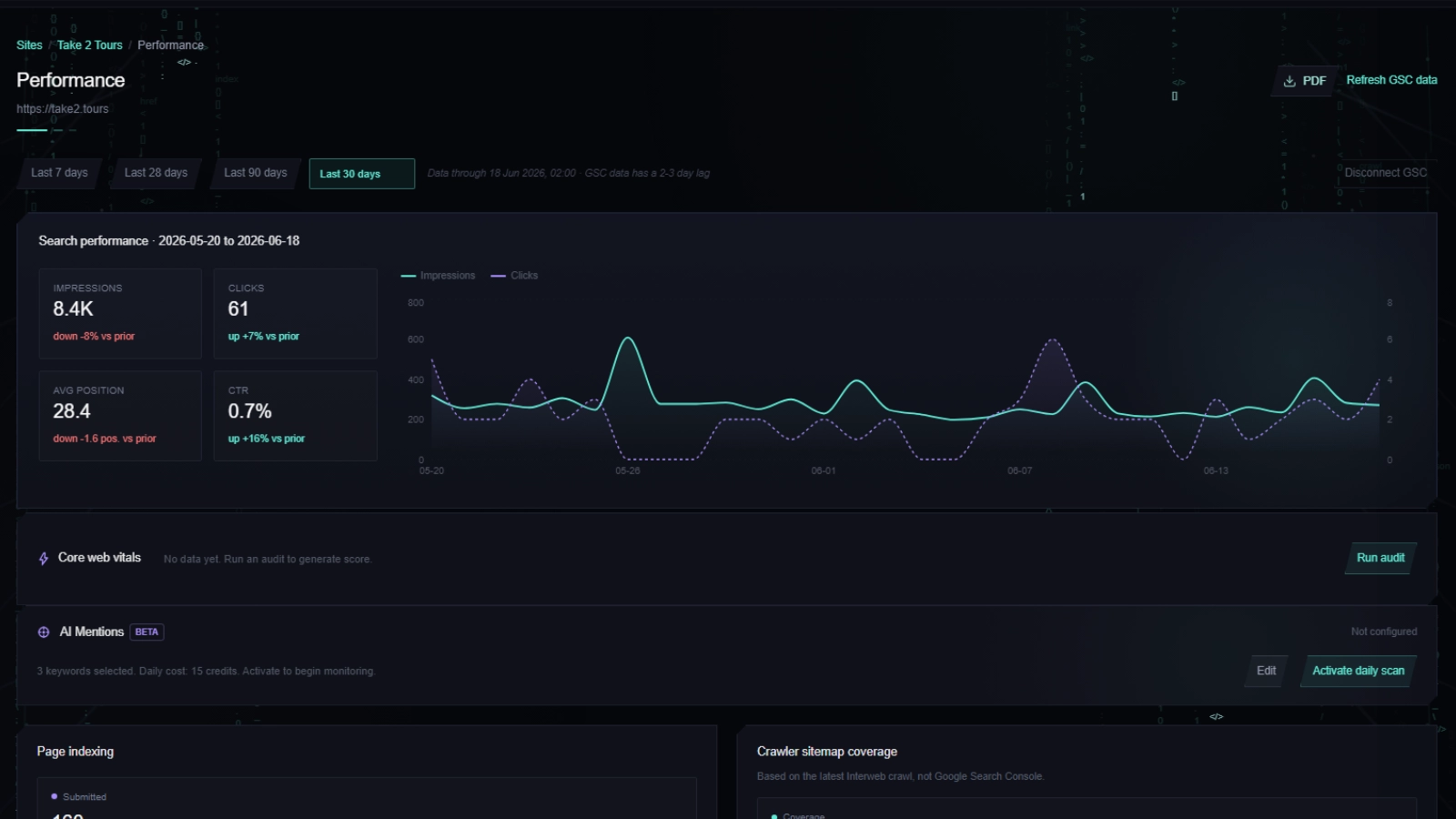
Reconstruct the ranking timeline against Search Console signals, releases, content changes, technical changes, competitor movement, search result behaviour and demand. The investigation looks for relationships rather than assigning blame to the nearest event.
If the movement is part of a broader organic traffic decline and the cause is not yet clear, start with the Traffic Drop investigation.
Possible diagnostic directions
A ranking drop can involve page ownership, technical constraints, website changes, competitors, search result behaviour, content or measurement. The investigation does not assume an algorithm update, penalty or single cause.
Root cause investigation
The investigation tests the strongest available explanations against affected and stable areas, the ranking timeline and the history of changes. It can identify what the evidence supports, what it rules out and where uncertainty remains.
A position loss is not automatically a penalty. It is a change that needs a defensible explanation.
Forensic deliverable
The deliverable is designed for decisions, not alarm. It records the confirmed movement, affected areas, timeline, strongest diagnosis, uncertainty and next verification point without promising recovery.
Queries, pages, groups, positions and search context that changed.
Where the loss is concentrated and which comparable areas stayed stable.
What the evidence supports, what it does not support and what remains open.
The most useful remediation or further investigation step and how to verify it.
Platform evidence
Query context, page groups, crawl evidence, implementation history and verification can remain connected to the ranking question rather than scattered across exports and isolated checks.
Start with the movement
Begin with the queries, pages and timing you have observed. The public diagnostic journey is the starting point for confirming what dropped and deciding what should happen next.