Prepare the move
Understand the important URL set, map old and new destinations, review redirect rules, preserve page intent and identify launch risks.
Interweb Media · SEO Migration Audit
An SEO Migration Audit establishes what needs to be protected before launch, what must be mapped during the change and what needs to be verified after the new site goes live.
For redesigns, replatforms, domain changes and major URL or architecture changes where organic visibility needs controlled transfer.
Migration risk
URLs, redirects, canonicals, internal links, templates, metadata, rendering and indexation can all change at the same time. Search visibility is carried by the relationships between those signals, not by a single migration checklist.
The audit creates a controlled view of what is moving, what must remain discoverable and what needs proof after launch. It does not promise that rankings will remain unchanged.
Pre-launch and post-launch investigation
Before launch, the investigation protects the release by making the old and new states comparable. After launch, it reconstructs what changed and verifies whether the released site is exposing the signals the search journey depends on. If the move is primarily a redesign rather than a URL, platform or domain migration, the Redesign Recovery investigation provides the more specific context.
Understand the important URL set, map old and new destinations, review redirect rules, preserve page intent and identify launch risks.
Keep the migration plan connected to implementation owners, dependencies, release conditions and the evidence needed for validation.
Check redirects, canonicals, internal links, rendering, indexation, affected pages and search performance against the migration baseline.
Investigation scope
A redirect list is not the same as a migration map. The investigation considers whether the destination preserves the old page’s purpose, whether the new architecture can be discovered and whether the change creates avoidable loss or ambiguity.
The scope follows the site and migration plan. It can include URL changes, lost pages, redirect chains, canonicals, internal linking, architecture, metadata, rendering and indexation where those signals are relevant.
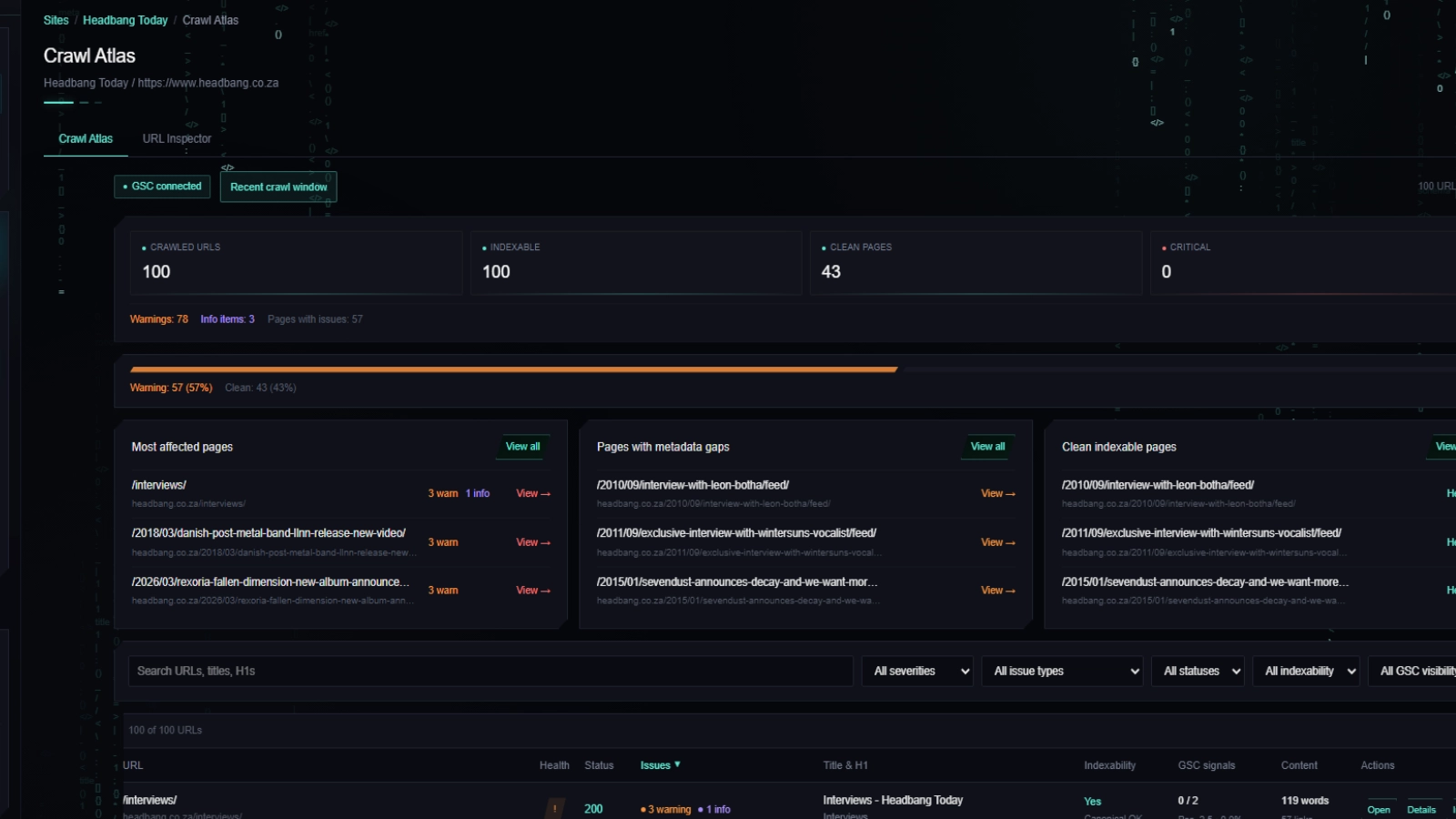
Preserve existing equity
Redirects matter, but the destination, page intent, internal linking, canonical signals, content and discoverability still determine what the new site communicates. The audit looks for gaps between the old page, the new page and the path search engines and users take between them.
Post-launch verification
After the release, compare the new state with the migration plan and the pre-launch evidence. Check that important pages resolve, redirects behave as intended, canonical signals are coherent and the new architecture is discoverable.
If organic visibility has already fallen and the cause is unclear, the migration evidence becomes part of a broader Traffic Drop investigation. If the confirmed symptom is position loss, the Ranking Drop investigation can examine the affected queries and pages.
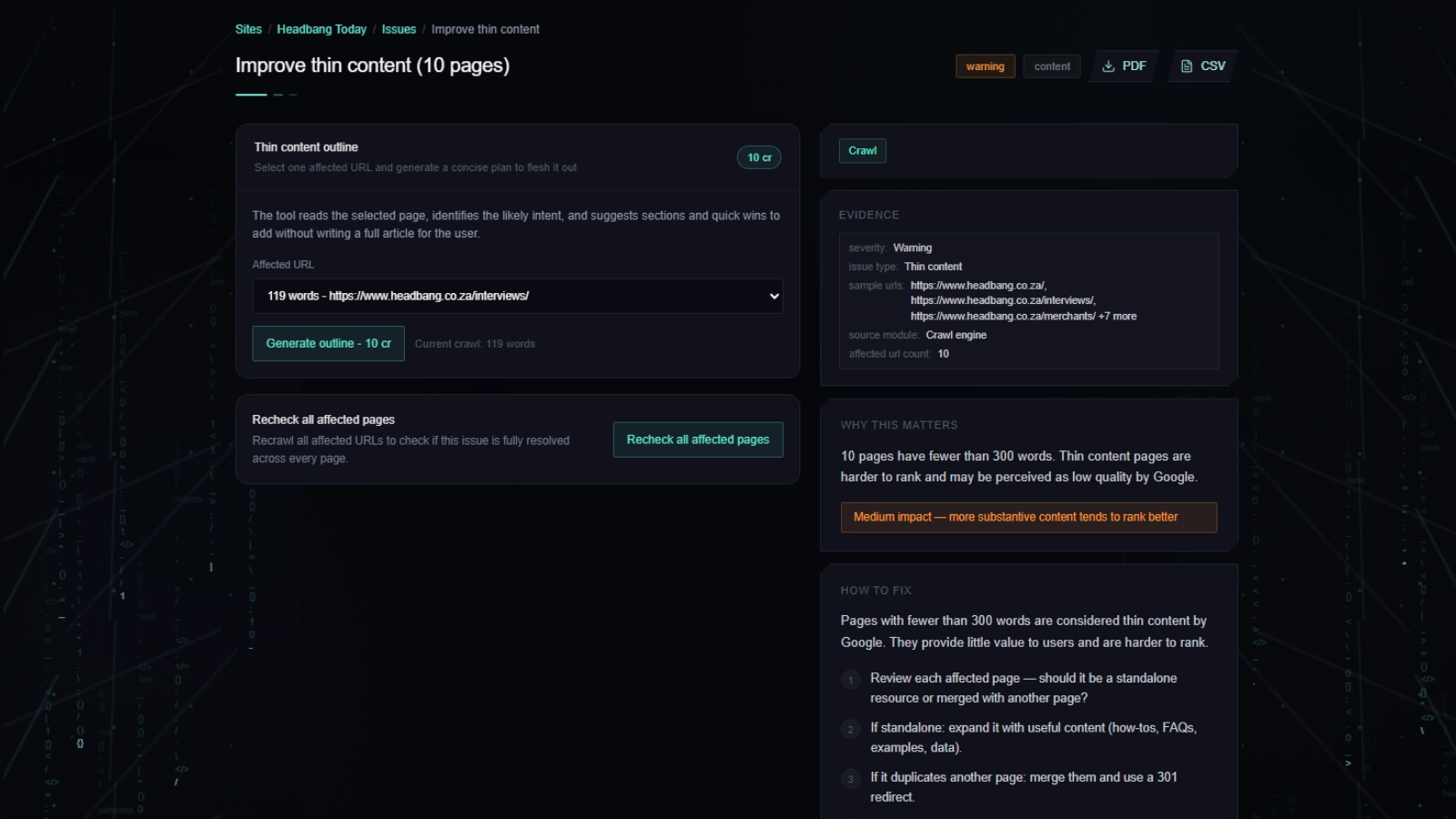
Recovery investigation
A post-migration loss does not prove that redirects failed, and it does not prove that the migration is the only cause. The investigation reconstructs the release, isolates the affected areas and tests the available evidence before recommending remediation.
This keeps the work migration-specific without assuming the answer in advance.
Audit deliverables
The output connects decisions made before launch with evidence observed after launch, so technical, product, content and leadership teams can work from the same account of the change.
Important old URLs, new destinations, redirect decisions and unresolved gaps.
Conditions that could affect discovery, indexation, page intent or search visibility.
Post-launch checks, affected pages, implementation status and evidence retained.
A prioritised repair or investigation path based on what the evidence supports.
Team collaboration
Migration work crosses SEO, engineering, product, content and leadership. A useful audit makes dependencies visible, gives owners a shared reference and keeps the verification question close to the implementation work.
See how Interweb connects investigation to implementation and verification →
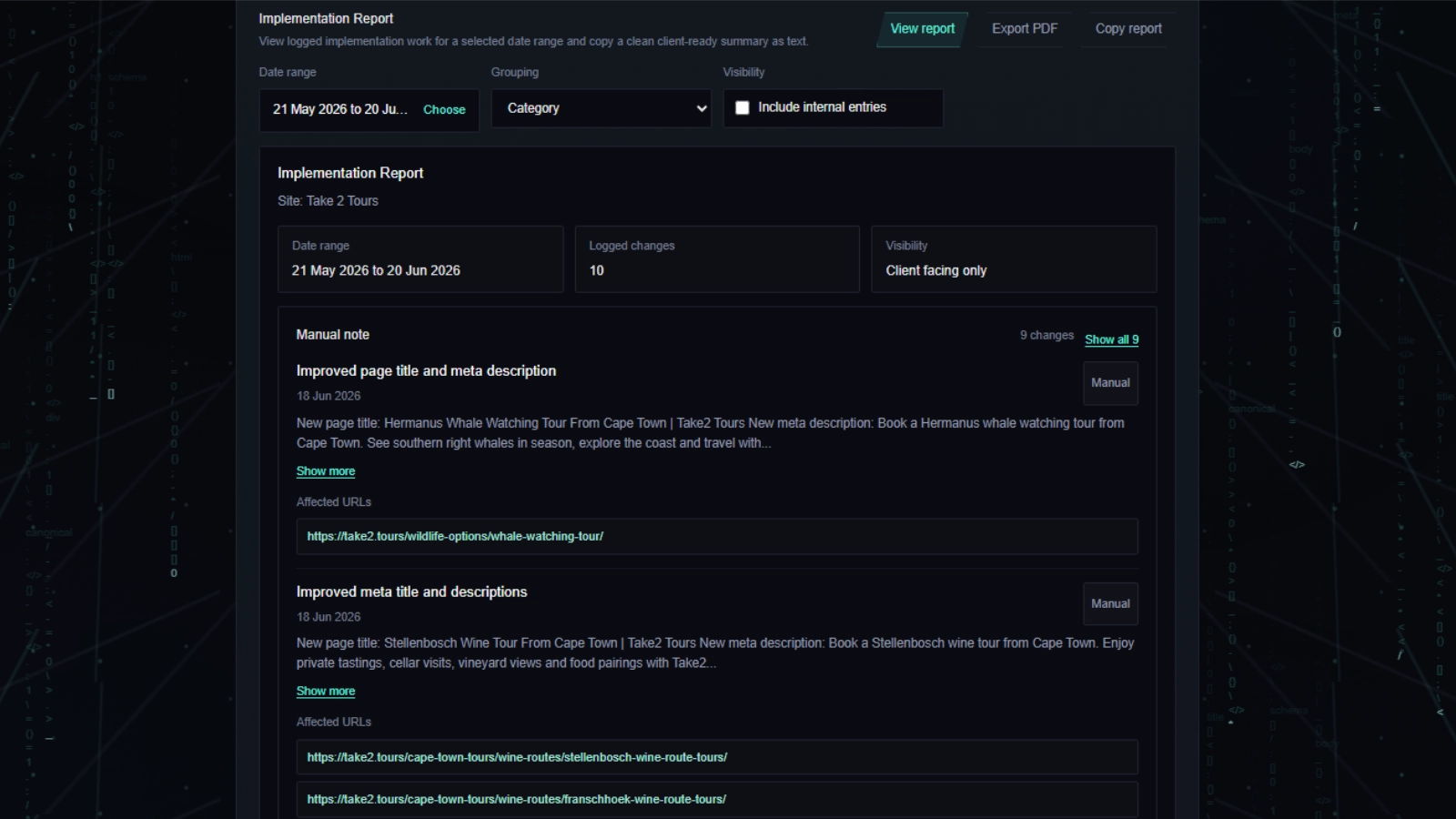
Platform evidence
Crawl evidence, affected page groups, issue status, implementation history and verification can remain connected to the old-to-new change rather than scattered across exports and release notes.
Start with the migration
Begin with the move you are planning or the visibility change you are investigating. The public diagnostic journey is the starting point for deciding what needs to be mapped, protected or verified.