Pages and purpose
Which pages attracted search demand, served intent and acted as entry points?
Interweb Media · Redesign Recovery
A redesign can change the signals search engines use without making the redesign itself the answer. Interweb compares the old and new states to establish what changed and what the evidence supports.
An investigative starting point for traffic, rankings or search visibility that changed after a rebuild.
Timing is a clue, not a verdict
Search performance may change after a rebuild because URLs, templates, content, internal linking, rendering, indexation or page intent changed. It may also change because demand, competitors, search results or measurement changed at the same time.
The investigation tests the relationship between the redesign and the affected search performance instead of assuming it from the calendar.
Old state / new state
The comparison is structural, not a fabricated before-and-after case study. It asks whether the new site preserves the important relationships that made the old site discoverable and understandable.
Which pages attracted search demand, served intent and acted as entry points?
Which destinations now carry that intent, and were pages lost, combined or weakened?
How did internal links, navigation and architecture help important pages be found?
What changed in depth, linking, templates, rendering or indexation after the rebuild?
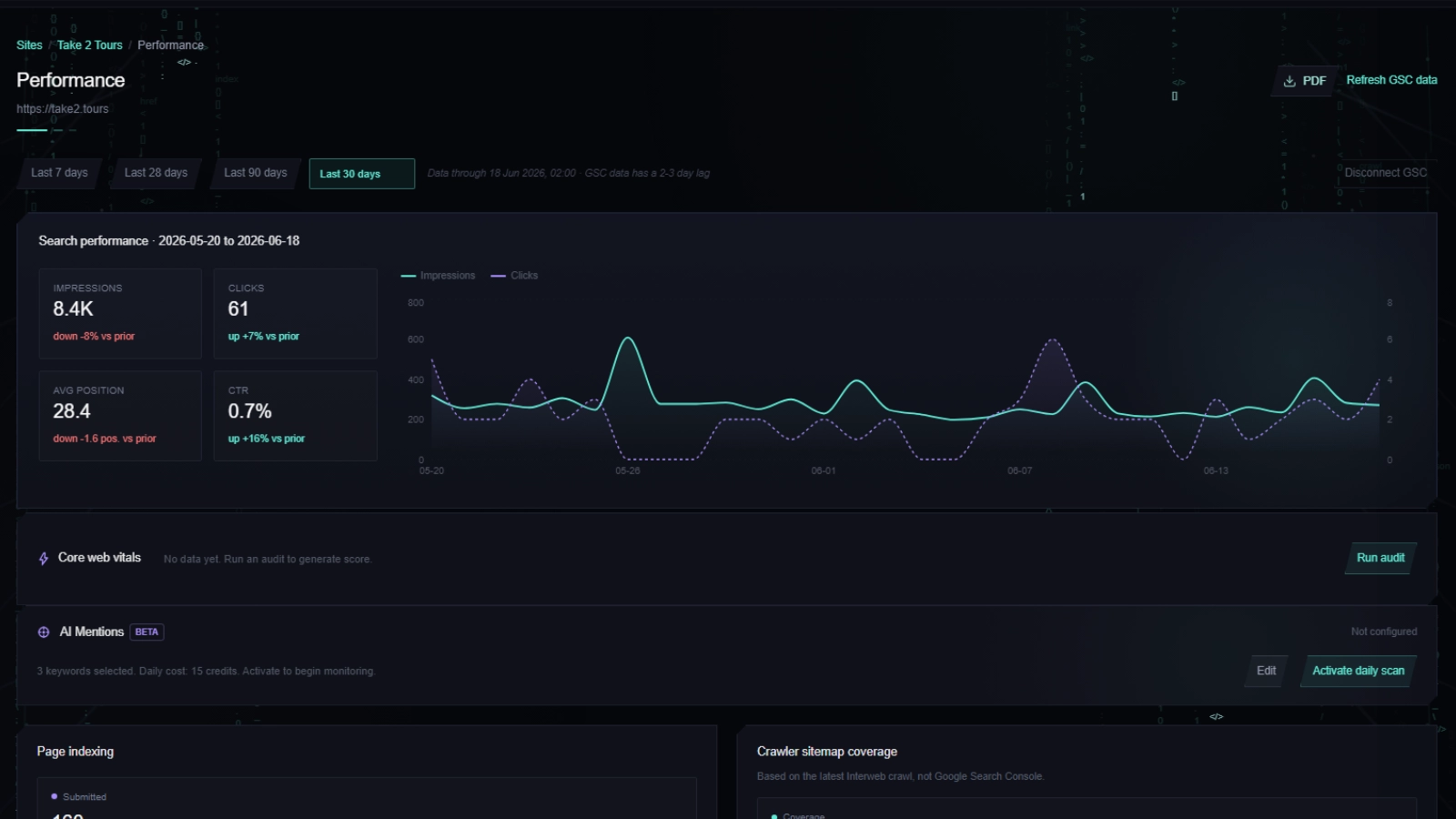
What did Search Console, rankings and affected page groups show before launch?
Which signals moved after launch, and are the changed areas the affected areas?
Build the timeline
Historical Search Console signals, ranking context, crawl evidence, implementation records and site changes help separate a redesign-related condition from a coincident movement.
The goal is not to create certainty where the evidence cannot support it. The goal is to make the next decision more defensible.
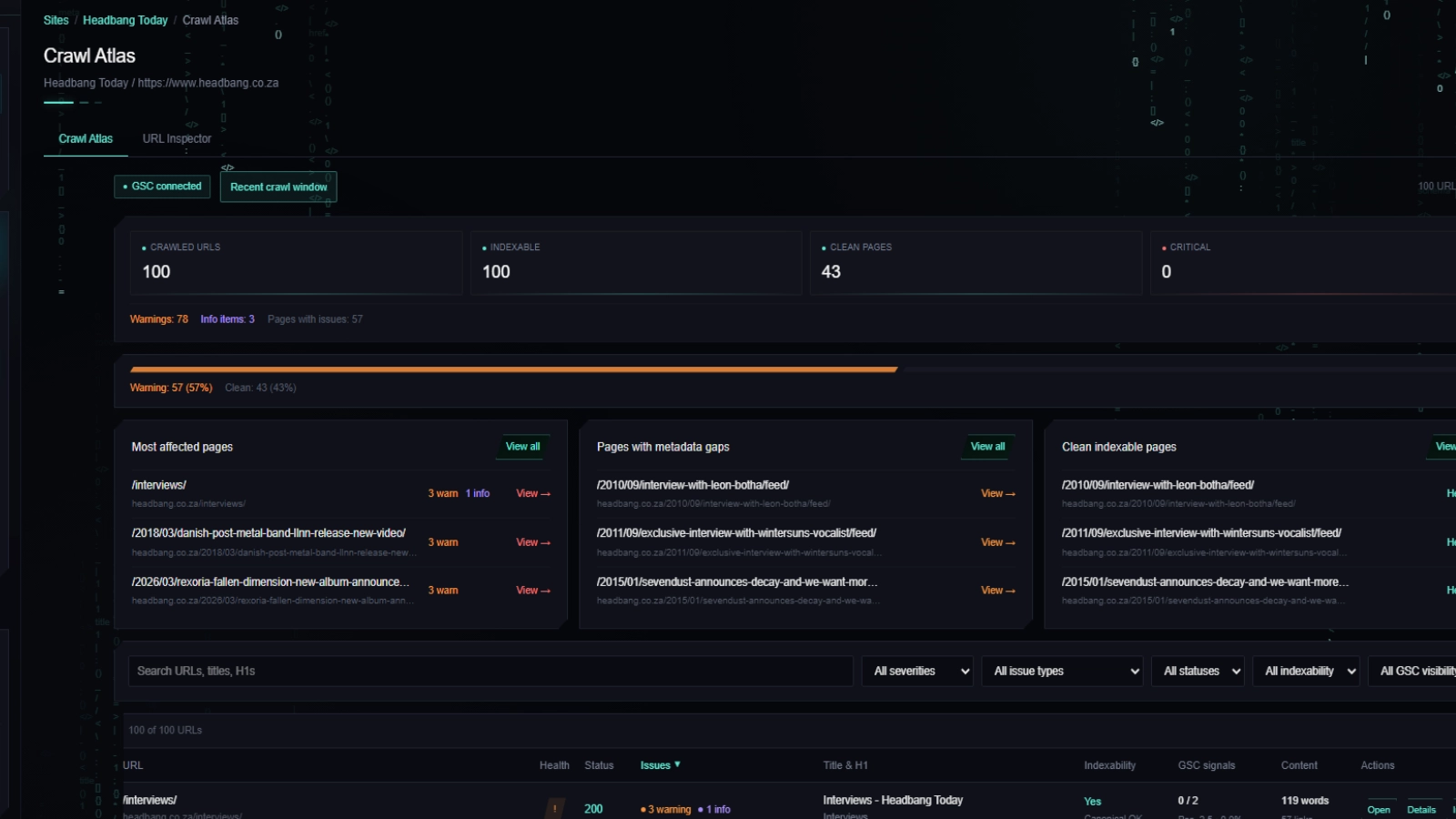
Find the affected areas
Compare affected and stable pages across templates, directories, markets, devices, queries, page types and internal paths. A broad traffic movement can have a narrow structural cause, or no redesign-related cause at all.
Concentration helps the investigation move from an impression about the whole website to a testable set of changed areas.
Root cause investigation
The investigation considers URL changes, lost pages, canonicals, internal linking, architecture, metadata, rendering, indexation and page intent where those changes correspond with the affected performance.
If the evidence points to broader technical constraints, the Technical SEO Audit provides the general technical investigation. If the redesign also involved a URL, platform or domain move, the SEO Migration Audit provides the migration-specific context. If the known symptom is position loss, investigate the Ranking Drop.
Forensic deliverable
The deliverable is designed for the business and development teams responsible for understanding, deciding and implementing the next move. It does not promise recovery; it makes the evidence and uncertainty usable.
Changed pages, templates, paths, signals and affected relationships.
Search performance, crawl, indexation and implementation history connected to the timeline.
What the evidence supports, what remains uncertain and what is not implicated.
A prioritised technical, structural, content or measurement decision for the existing team.
Work with the existing development team
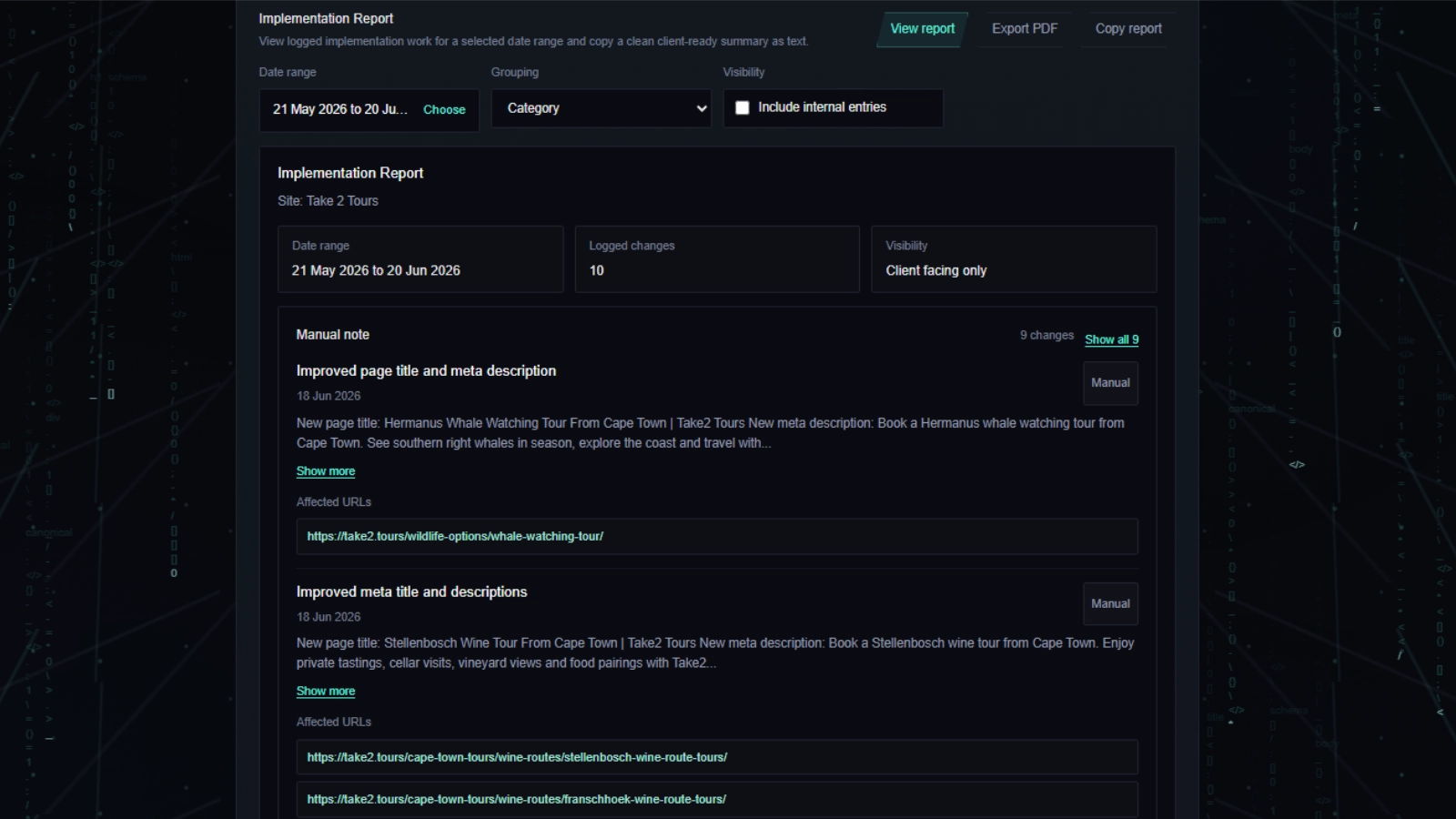
Recovery work is more useful when the SEO investigation can be connected to release decisions, owners, implementation history and verification. Interweb can provide the diagnosis and work alongside the team already responsible for the website.
See how investigation connects to implementation and verification →
Platform evidence
Crawl evidence, affected page groups, search performance, issue status, implementation history and verification can stay connected to the redesign question rather than scattered across exports and release notes.
Start with the comparison
Begin with the website, the redesign timeline and the search performance change you observed. The public diagnostic journey is the starting point for establishing what changed and what should happen next.