Crawlability and indexation
Trace access, discovery, rendering, directives, canonicals and indexation patterns across the pages that matter.
Interweb Media · Technical SEO Audit
Find the technical issues limiting organic visibility, understand why they matter and leave with a prioritised implementation plan.
A professional investigation for teams that need a diagnosis, not another automated score.
Crawl findings are not the diagnosis
Technical SEO tools are useful evidence sources. They surface broken links, indexability signals, duplicate patterns and page-level conditions. The specialist work begins by connecting those observations to architecture, search behaviour, page intent, business value and implementation reality.
The audit turns a long issue list into an explanation of the constraint and a defensible order of work.
Investigation scope
Investigation areas are connected rather than treated as a generic checklist. The depth and emphasis follow the shape of the site, the search problem and the decisions the team needs to make.
Trace access, discovery, rendering, directives, canonicals and indexation patterns across the pages that matter.
Examine hierarchy, templates, internal linking and the way authority and intent move through the site.
Connect metadata, structured data, status codes, duplication, performance and page experience to affected URLs.
Compare queries, pages, ranking friction and the intended search journey so technical findings have context.
Separate isolated defects from repeatable system conditions that affect sections, markets, products or page types.
Identify dependencies, ownership, release risk and the evidence required to confirm that a fix worked.
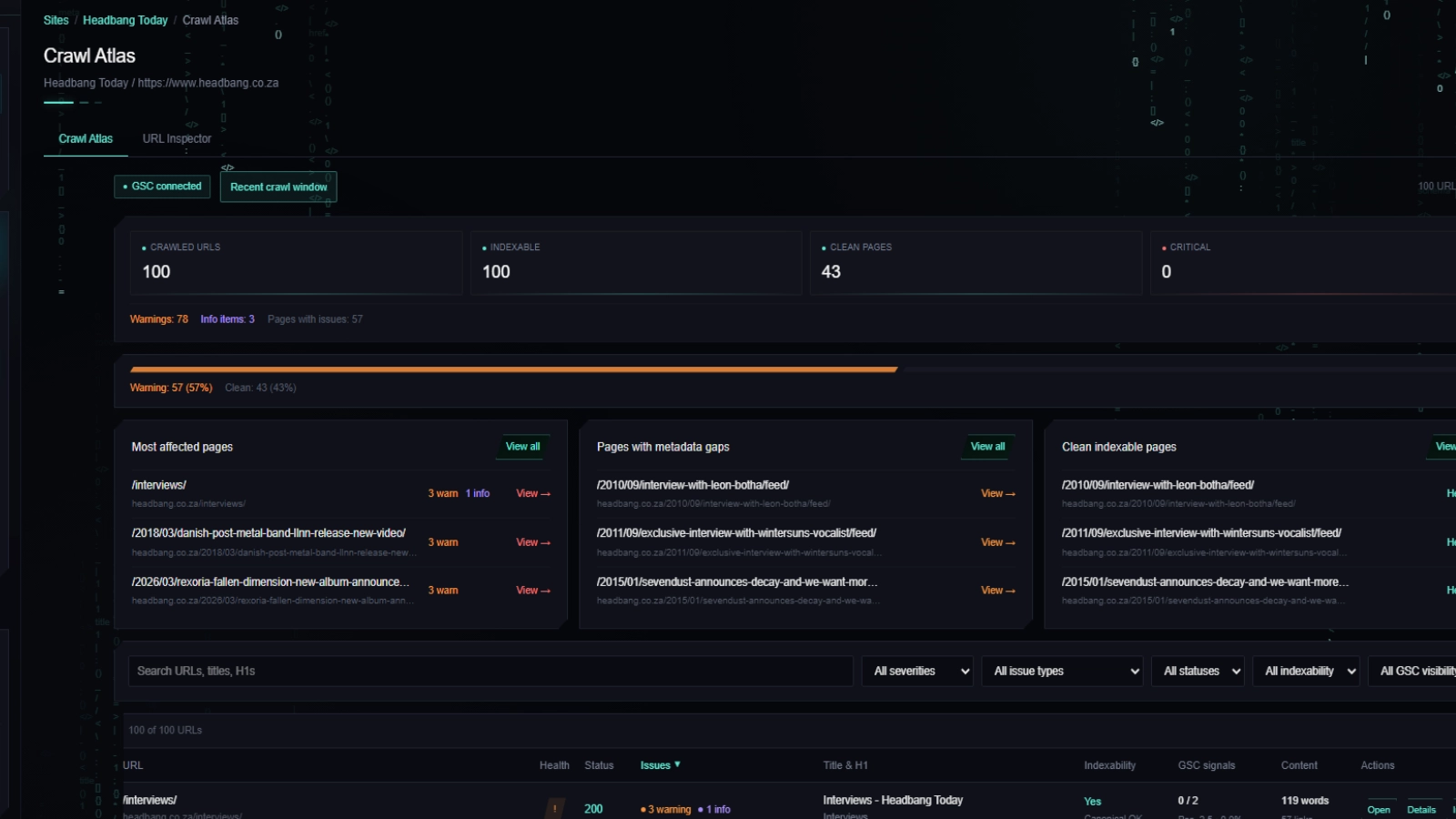
Forensic process
Interweb Media works from the question behind the audit, not only from the output of a crawler. Evidence is tested against the site’s structure and search behaviour before recommendations are written.
This is how technical findings become a practical repair path instead of a document that waits for someone else to interpret it.
Audit deliverables
The deliverable is shaped for the people who need to decide, implement and verify the work.
What is constraining organic visibility, where it occurs and why it matters.
What should happen first, what can wait and what depends on another change.
The action, affected pages, ownership and practical dependencies behind the recommendation.
The signal or page condition to recheck so completion is evidence-based.
Implementation options
Some teams need a clear decision framework to execute internally. Others need specialist direction, implementation coordination or a continuing operating rhythm. The next step follows the diagnosis.
Understand the gap between audit findings and implementation →
Complex website context
Large sites rarely have one technical issue. They have templates, markets, ownership boundaries, releases and dependencies that make the order of work consequential. A specialist audit separates systemic conditions from local defects and shows where a change will travel. When that complexity materially changes the investigation, compare the Enterprise SEO Audit scope.
When the technical question is specifically about protecting signals during a website move, the SEO Migration Audit provides the migration-specific investigation.
When the technical question follows a redesign or rebuild, the Redesign Recovery investigation keeps the old and new states in view.
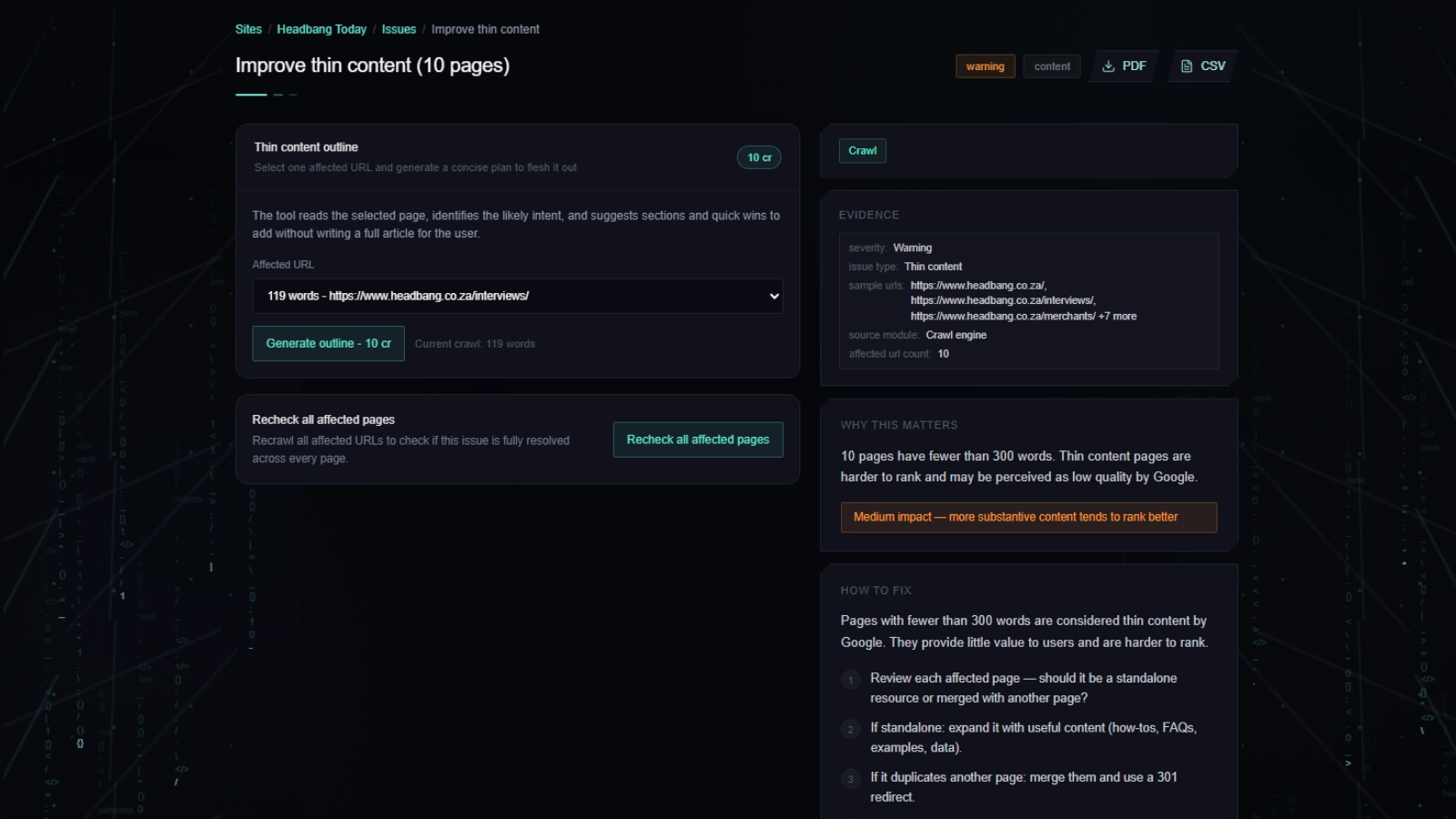
Platform evidence
Interweb connects crawl evidence, search performance, prioritisation, implementation records and verification. It supports the audit without replacing specialist judgment.
See how the Interweb Platform supports diagnosis and implementation →
Start with the diagnosis
Begin with the domain and the problem you need understood. The existing diagnostic journey is the starting point for deciding whether a professional forensic audit is the right next step.